

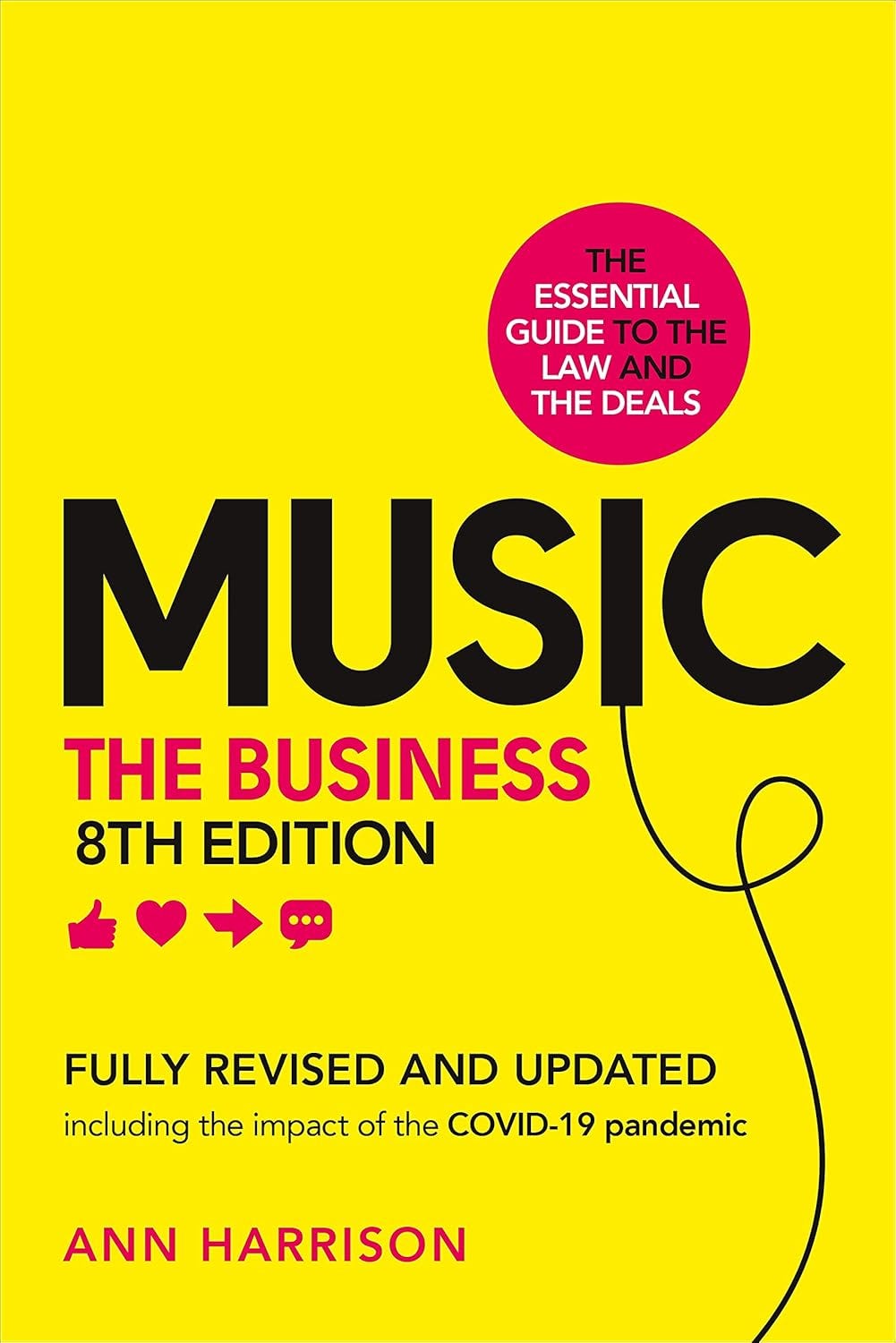
PART 1: CHAPTER-BY-CHAPTER LOGICAL MAPPING
CHAPTER 1: Getting Started
Core Claim: Getting into the music business requires simultaneous buzz-creation, team assembly, and legal/financial preparation—and these activities should begin earlier than most artists initiate them.
Supporting Evidence:
Unsolicited demos increasingly refused by major labels; MP3 submissions replacing physical CDs
Multiple pathways to industry attention: gigs, demos, competitions, industry nights, social networking
Scouts validated by record companies as a key discovery mechanism; A&R people require peer confirmation before signing
PRS legal referral scheme provides reduced-rate legal access at the earliest stage
Logical Method: Sequential escalation—from getting noticed, to protecting the name, to assembling advisers before the deal arrives.
Logical Gaps:
The chapter assumes a UK-based artist on the London circuit. The geography of discovery (M25 bias acknowledged but not quantified) limits the prescriptive value of the advice.
“Create a buzz” is described as essential but never operationalized beyond anecdote (Sandi Thom’s basement webcasts). What specifically constitutes sufficient buzz to trigger A&R interest is left unmeasured.
The advice to get a lawyer before a contract arrives is correct but not paired with realistic cost estimates for artists who have no income yet.
Methodological Soundness: The chapter is sound as a practical checklist. The case law citations (Liberty X, Blue) establish that band name disputes have material consequences, which is the right framing for motivating early action.
CHAPTER 2: Management Deals
Core Claim: The manager-artist relationship is a fiduciary one carrying legal duties that have been repeatedly litigated; artists who fail to obtain independent legal advice before signing management contracts expose themselves to contracts that courts may void but rarely fully unwind.
Supporting Evidence:
Gilbert O’Sullivan case (1985): Court of Appeal voided management/recording/publishing contracts but declined to return copyrights—only future rights freed
Joan Armatrading case (1985): Five-year exclusive contract with 25% commission on new deals set aside for undue influence and lack of independent advice
Elton John v. Dick James (1991): Confirmed fiduciary duty extends to companies under manager’s control
Robbie Williams v. Martin-Smith: Manager acting for band as whole found not in breach when individual member left
Seal v. Wardlow (2007): Settlement superseded original arrangement; Wardlow could not exercise undue influence by 1995 when no longer manager
Logical Method: Case law accumulation → principle extraction → practical contractual implications.
Logical Gaps:
The 20% commission standard is presented as average without citing the distribution of actual commission rates in the market—how many managers charge 15%, 25%, or operate on hybrid models?
“Post-term commission” debate is handled descriptively rather than analytically. The competing interests (manager deserves ongoing reward for originating deals vs. artist penalized for success) are not resolved, merely enumerated.
The chapter warns extensively against conflicts of interest in 360-degree management structures but offers no tested mechanism beyond “take legal advice” for resolving them.
Methodological Soundness: The legal analysis is grounded in actual court decisions. The practical advice derived from those decisions (separate lawyers, written commission structures, key-man clauses) follows logically from the case law.
CHAPTER 3: What Is a Good Record Deal?
Core Claim: A good record deal is not defined by advance size alone but by the balance between financial return, creative control, and commitment—and the legal doctrine of restraint of trade provides a floor below which contract terms cannot fall without becoming unenforceable.
Supporting Evidence:
Macaulay v. Schroeder (1974): Exclusive publishing deal voided by House of Lords as unreasonable restraint of trade
George Michael v. Sony (1994): Contract upheld—artist had experienced legal advice, substantial financial benefits justified restrictions
ZTT v. Holly Johnson (1993): Contract voided—potential eight-to-nine-year term, no release obligation
95% of signed artists fail to achieve profitability (industry figure, unattributed)
360-degree deals: Robbie Williams/EMI (2002), Madonna/Live Nation (2007) as paradigm cases
Production deals: 50:50 net profits structure analyzed; artist equivalent royalty can fall to 11% if production company sells on at 22% dealer royalty
Logical Method: Legal doctrine (restraint of trade) → case law boundary-setting → practical negotiating implications by contract type.
Logical Gaps:
The 95% non-recoupment figure is presented without source or methodology. It is cited as justification for why record companies retain copyrights, but if 95% of artists never recoup, the economic logic of retaining copyright as an asset against unrecouped advances is questionable—the asset generates no recoupment income from those artists anyway.
The 360-degree deal analysis describes the structure but does not model the economics. At what level of live revenues does sharing 15-20% with the label become net positive versus negative for the artist? This calculation is left to the reader.
“Two-album firm” deals are introduced and immediately qualified: “if things aren’t going well, the company will probably try and get out of it.” This makes the practical value of such a commitment near zero in adverse conditions—a point the chapter notes but doesn’t resolve.
Methodological Soundness: The legal analysis is rigorous. The commercial analysis is appropriately qualified but underquantified. Production deal arithmetic (the 11% royalty equivalent calculation) is one of the book’s more valuable analytical contributions.
CHAPTER 4: What Is a Good Publishing Deal?
Core Claim: Publishing rights are more valuable, more legally complex, and more easily lost than most new artists appreciate; the doctrine of restraint of trade applies equally to publishing as to recording, and the practical consequences of getting publishing wrong compound over decades.
Supporting Evidence:
Spandau Ballet case: Mere performance/interpretation does not constitute co-authorship; contribution must be to composition, not interpretation
Matthew Fisher v. Gary Brooker (2006): Organist awarded 40% of musical copyright forty years after the fact—delay not fatal due to “licence revocation” theory
Solomon Linda case: Rights can revert under Commonwealth copyright law after 25 years; Disney’s The Lion King licensing traced back to original 1939 composition
Hyperion v. Sawkins (2005): Editorial work on out-of-copyright material can create new copyright
Macaulay v. Schroeder: Exclusive publishing contracts held to restraint of trade doctrine
Frankie Goes To Hollywood (ZTT): 35% publisher retention rate criticized as too high; 25-30% now more common
Stone Roses case: Open-ended term voided; inadequate advances criticized
Logical Method: Copyright ownership analysis → case law on authorship disputes → publishing contract type analysis → restraint of trade floor.
Logical Gaps:
The “at source” versus “receipts” royalty distinction is the chapter’s most important practical contribution, but the example given (10,000 euros in France) uses a 25% UK publisher fee and 15% sub-publisher fee. Real sub-publisher fees can range from 15-25%; the compounding effect at the high end is not shown.
The Matthew Fisher case is noted as “under appeal” at time of writing. Its long-term doctrinal significance for session musician claims is mentioned but the practical risk this poses to any recording made without explicit co-authorship waivers is understated.
The chapter treats the three publishing deal types (administration, sub-publishing, exclusive) as alternatives available to most artists. In practice, exclusive publishing deals are the only option available to artists without bargaining power—the alternatives presuppose either catalogue value or sufficient organizational capacity to self-administer.
Methodological Soundness: The legal analysis is strong. The case law selection is well-chosen. The economic analysis of royalty calculations is accurate but incomplete.
CHAPTER 5: Getting a Record Made
Core Claim: The recording process involves multiple overlapping contracts with legal consequences that artists routinely ignore; session musicians, producers, and mixers all have rights that must be explicitly bought out to avoid downstream disputes.
Supporting Evidence:
Springsteen v. Flute: Outtakes belong to sound recording copyright owner; label releasing outtakes without consent infringes
Elvis Costello case (1997): Tour break payment dispute—gap between contracts treated as part of continuous engagement
Production deal royalty arithmetic: 22% dealer royalty → 50:50 split → 11% equivalent for artist
Bluebells/Valentine, Pink Floyd cases: Session musicians can claim co-authorship decades after the fact if improvisation is shown
Logical Method: Contractual relationship mapping (record company → production company → artist → producer → mixer → session musician) → legal risk at each link.
Logical Gaps:
The “recording fund deal” vs. “personal advance plus recording costs” comparison is flagged as potentially disadvantageous to the artist, but no calculation shows when the crossover point occurs. Artists with home studios would benefit from knowing the actual arithmetic.
Delivery requirements (label copy, performers’ consents, sample clearances) are listed extensively but presented as bureaucratic formality. The chapter would benefit from documenting what happens when delivery fails mid-contract—illustrated by one case where the record company closed before releasing an accepted album.
Methodological Soundness: The Springsteen and Costello cases ground the legal analysis. The session musician co-authorship risk, taken together with Chapter 13’s sampling analysis, forms the book’s strongest integrated legal argument.
CHAPTER 6: Manufacture, Distribution, and Marketing
Core Claim: Physical distribution remains significant but is undergoing structural consolidation; the practical risk to independent labels from distributor insolvency is underappreciated and insufficiently protected against in most contracts.
Supporting Evidence:
CD sales declining up to 20% year-on-year
Distribution fee ranges: 15-18% for successful independents; 23-25% average; singles figures as high as 28-30%
Retention of title clauses as partial protection against distributor insolvency
Example of A&R manager confirming that a showcase open to rival labels was acceptable because the artist ultimately signed to his company
Logical Method: Descriptive market overview → contract structure analysis → risk identification.
Logical Gaps:
Retention of title clauses are introduced as protective but the chapter immediately concedes that “specialised legal advice is needed” and that liquidators will “want to get around” them. The practical effectiveness of these clauses is left unquantified.
The section on TV advertising describes a record company rushing out a cheap campaign to reduce royalties on existing successful sales. This is a form of contractual bad faith that the chapter describes but offers no contractual mechanism to prevent—only “awareness.”
Marketing section is largely aspirational. No metrics for what constitutes a successful campaign, no evidence base for which promotional activities generate marginal return.
Methodological Soundness: The retention of title issue is legitimately flagged. The economic analysis of distribution fees is one of the book’s more practically grounded sections.
CHAPTER 7: Online Sales and Distribution
Core Claim: The digital disruption of the music industry is structural, not cyclical; the winners are outside the traditional music business, and the record companies’ instinct to litigate and restrict rather than adapt has damaged both consumer relationships and revenue.
Supporting Evidence:
20 illegal downloads for every legal one (IFPI estimate)
Average Radiohead “In Rainbows” download price: £2.88; 38% paid minimum 45p handling fee; 1.2 million website visitors in first 29 days
YouTube blanket license deal with MCPS-PRS Alliance established one-stop synchronisation and mechanical license
SABAM v. Scarlet (Belgian court): ISP must take responsibility for illegal file-sharing; first European decision of its kind
EMI DRM-free download scandal: purchased tracks contained buyer’s personal identification data embedded
Logical Method: Structural disruption analysis → failed industry responses (DRM, litigation) → emerging viable models → future speculation.
Logical Gaps:
The chapter makes the normative claim that “criminalising ordinary people who download music for free is counter-productive” but does not quantify the revenue impact of decriminalization strategies versus enforcement strategies. The assertion is plausible but unproven.
The Radiohead model is presented as a paradigm but the chapter notes Thom Yorke disputed the published figures and declined to provide his own. The example thus rests on contested data.
The chapter’s “future” section (major labels survive but change to distribution/marketing function; albums become less important; advertising plays larger role) reads as reasonable projection but acknowledges it is speculation. The internal consistency of predictions is not tested.
Methodological Soundness: The structural analysis is the book’s most ambitious. The legal analysis of SABAM v. Scarlet is appropriately tentative. The chapter is strongest as diagnosis, weakest as prescription.
CHAPTER 8: Branding
Core Claim: Brand protection requires proactive trade mark registration—passing off is an inadequate substitute—and the window for effective registration closes faster than most artists realize, as the Elvis Presley case demonstrates.
Supporting Evidence:
Elvis Presley estate: Trade mark applications refused (filed 1989, ten years after death) because name had insufficient distinctiveness in UK market
Wet Wet Wet case: Trade mark cannot prevent use of band name as descriptive subject of a book
Saxon case: First to register trade mark wins; band members without written agreement cannot prevent registration by departing member
Spice Girls v. Panini: Passing off failed because no evidence of existing trade in merchandise; unofficial product not labeled as authorized
P Diddy: Internet posting of material can constitute trade mark infringement in countries where viewed, not just where hosted
Logical Method: Passing off limitations → trade mark registration requirements → case law on distinctiveness → practical registration advice.
Logical Gaps:
The chapter advises registering trade marks “as soon as you can afford to” but provides no cost estimates. Artists cannot act on this advice without knowing the order of magnitude of filing fees.
The Spice Girls v. Panini logic—that passing off requires existing trade in the relevant category—creates a timing paradox: you need the merchandising trade to protect the merchandising trade. The chapter notes this but offers no solution beyond registering a trade mark earlier.
360-degree deals and merchandising rights are noted as increasingly linked; the chapter acknowledges the conflict of interest risk but defers to the earlier record deal chapter.
Methodological Soundness: The case law selection is well-chosen and logically ordered. The Elvis Presley timing lesson is the chapter’s most actionable contribution.
CHAPTER 9: Sponsorship
Core Claim: Sponsorship deals require the same legal rigour as recording deals; misrepresentation (as in Spice Girls v. Aprila) can void payment obligations, and ethical screening of sponsors is commercially as well as personally significant.
Supporting Evidence:
Spice Girls v. Aprila (2000): Spice Girls lost payment claim because they concealed Geri Halliwell’s imminent departure at time of deal
Doc Marten boots: Direct artist approach to sponsor cited as viable
Tom Waits settlements: Sound-a-like voice in adverts generates successful passing off/false endorsement claims
Logical Method: Descriptive deal structure → misrepresentation risk → ethical screening rationale.
Logical Gaps:
The chapter lacks evidence on typical sponsorship fee ranges for non-stadium artists. “Figures of a million pounds plus for big name artists” is not useful for the majority of the book’s audience.
The ethical screening section is entirely normative—based on Harrison’s values rather than evidence about how sponsor associations affect artist careers. The U2/iPod example (mixed reactions) suggests the market is not uniform.
Methodological Soundness: The Aprila case is the chapter’s analytical foundation and the lesson (disclose material information before deal closes) is clear and correct.
CHAPTER 10: Touring
Core Claim: Live music is currently the music industry’s most economically healthy sector; the Madonna/Live Nation deal represents a structural shift in which promoters absorb the functions of record labels, but this model depends on continued live sector buoyancy that may not be permanent.
Supporting Evidence:
Mintel: Live music market projected at £836 million by 2009
Madonna deal: Reported £120 million over 10 years; $17.5m sign-on; $50-60m for three albums; $50m for concert promotion rights; 90% of gross touring revenues retained
Van Morrison v. Marlow: Promoter who leaked concert details to press caused cancellation; court found ambiguous contract terms against artist’s service company
Kiri te Kanawa case: No contract formed because no firm commitment; emails with venue details insufficient
George Michael: Fined £130,000 for exceeding licensing curfew at Wembley (£10,000/minute)
Logical Method: Market data → deal structure evolution → contractual obligations → regulatory environment.
Logical Gaps:
The Madonna deal arithmetic deserves skeptical examination: £120 million over 10 years assumes continued touring pace and brand value for an artist who will be 59 at deal end. The chapter acknowledges this risk but does not model downside scenarios.
Tour support is described as “usually 100% recoupable” but negotiations to reduce to 50% are possible “if you have a lot of bargaining power.” What specific bargaining leverage triggers this concession is not established.
The Licensing Act section notes the impact was “broadly neutral” but grassroots venues experienced increased bureaucracy. The chapter does not quantify how many venues closed or stopped hosting live music as a result.
Methodological Soundness: The legal cases (Van Morrison, Kiri te Kanawa, Elvis Costello) are well-selected. The economic analysis of the Madonna deal is appropriate in acknowledging its speculative elements.
CHAPTER 11: Band Arrangements
Core Claim: The absence of written band agreements creates legal uncertainty that courts resolve through archaic partnership law; the disputes that result are expensive, public, and often produce outcomes that no party wanted.
Supporting Evidence:
Frankie Goes To Hollywood trade mark case: Band name owned by all members as partnership goodwill; Holly Johnson could not register it individually despite being most prominent member
Saxon case: First-to-register wins absent written agreement; but bad faith registration can be challenged
James Bourne v. Brandon Davis: Performer’s rights can be partnership property; individual members cannot deal with them without all partners’ consent
Cure case: Unequal recording income split upheld because deal not objectively bad, even without independent advice
Three approaches to publishing income division: individual control; rotating single credit; equal sharing until recoupment then individual accounts
Logical Method: Default legal framework (Partnership Act 1890) → its inadequacy for band arrangements → case law failures → practical alternatives.
Logical Gaps:
The chapter acknowledges that “most [bands] never do anything about [a band agreement]” despite being advised to. This admission undermines the chapter’s own prescriptive force. No mechanism is proposed for overcoming this behavioral reality.
The leaving member provisions section presents a complex multi-party accounting scenario (four-piece band, £100,000 unrecouped) but does not show the mathematics clearly enough for a practitioner to verify the calculation.
“Service agreements” for tax purposes are mentioned but the chapter immediately notes that HMRC will look through them if the relationship is actually employment. The practical threshold for when a service company works is not given.
Methodological Soundness: The Bourne case is particularly well-analyzed, showing how performer’s rights can become partnership property even without a formal agreement. The chapter makes its best legal contribution here.
CHAPTER 12: Moral Rights and Privacy
Core Claim: UK moral rights are legally present but practically weak due to the waiver provision; UK privacy law is developing through breach of confidence rather than an explicit right to privacy, and outcomes remain judge-dependent and unpredictable.
Supporting Evidence:
Paternity right requires prior assertion; integrity right does not
George Michael case (Morrison Leahy v. Lightbond, 1993): Eight-second megamix with lyric alteration is “treatment” for integrity right purposes
UK publishers include standard moral rights waivers in all contracts
Douglas v. Hello!: Privacy via breach of confidence; OK! ultimately denied commercial damages by House of Lords
Campbell v. MGN: Narcotics Anonymous therapy details protected; 3-2 House of Lords majority
McKennitt v. Ash (2006): Clearest statement of current law—balance between privacy and press freedom; public figure does not forfeit all privacy
Logical Method: Statutory rights analysis → waiver provision → practical substitutes (contractual protections) → parallel development of privacy through breach of confidence.
Logical Gaps:
The chapter criticizes moral rights waivers as a “peculiarly British” capitulation to industry pressure but then advises artists to use the waiver negotiation as leverage for better contractual credits. This is pragmatically sound but doesn’t resolve the normative critique.
The privacy case law section is largely descriptive. The chapter cannot predict outcomes (acknowledged) but also does not identify the factors that most reliably predict success or failure in privacy claims—which would be more useful to practitioners.
Methodological Soundness: The moral rights analysis is technically precise. The privacy section is appropriately uncertain given the state of the law at time of writing.
CHAPTERS 13-15: Sampling, Piracy, Collection Societies
Core Claims:
Sampling: Any distinctive portion constitutes potential infringement regardless of length; deliberate copying requires licensing both sound recording and underlying composition rights
Piracy: Physical and online piracy are materially different in enforcement mechanism; SABAM v. Scarlet suggests ISP liability may be coming but is not yet established
Collection societies: Digital licensing is being standardized through blanket licence schemes; the MCPS-PRS Alliance and GEMA CELAS initiative represent the most significant structural response to online licensing fragmentation
Supporting Evidence:
Colonel Bogey (1934): 28 bars / 20 seconds = infringement; quality not quantity test
Beloved case: Eight seconds sufficient to constitute substantial part
Walmsley case: Uncleared sample responsibility—equity prevents party who knowingly took uncleared samples from voiding payment to artist
Shut Up And Dance: Explicit policy of never clearing samples led to MCPS damages action
MCPS-PRS Copyright Tribunal decision: 8% of gross revenues for on-demand downloads; 6.6% for interactive webcasting; 5.75% for non-interactive
Bluebells, Pink Floyd: Session musician improvisation can constitute co-authorship decades after the fact
Logical Gaps:
The sampling chapter focuses almost entirely on the UK/US perspective. In practice, samples from African, Caribbean, and South Asian music traditions create jurisdictional complexity that is not addressed.
The collection societies chapter describes the CELAS initiative as promising but notes its mandate is still being established. The chapter cannot assess whether the initiative succeeded.
The Shut Up And Dance case is the only example of a label with an explicit no-clearance policy facing consequences. The implication that others have gotten away with it is implicit but not examined.
Methodological Soundness: The sampling chapter’s legal analysis is the book’s most technically complete. The collection societies chapter is thorough but necessarily dated given the pace of digital licensing development.
BRIDGE: Synthesizing the Logical Architecture
The book’s argumentative spine: The music business is a set of overlapping contractual relationships, each carrying legal risks that courts have defined through decades of litigation by artists who lacked proper advice at the critical moment. Harrison’s project is to frontload that legal knowledge before the artist reaches those moments.
Three structural tensions run throughout:
Tension 1: Descriptive versus Prescriptive Authority. The book is written from Harrison’s 25-year professional experience and is candid about drawing on cases she personally worked on. This gives it unusual authenticity but creates a selection bias: the cases and deals described are those that reached Harrison’s desk or the law reports, not a random sample of industry practice. The book advises what to negotiate but cannot tell readers how often those negotiations succeed.
Tension 2: The Interest Misalignment Problem. The book consistently shows that managers, record companies, and publishers have structural incentives misaligned with artists. Yet it cannot solve this—it can only equip artists to identify and resist the misalignment. The repeated pattern of “young, unknown artist without independent legal advice signs unfavorable contract” is documented in case after case (O’Sullivan, Armatrading, Elton John, George Michael, Frankie Goes To Hollywood, Stone Roses). The prescription is always “get a lawyer earlier.” The book does not examine whether the legal advice itself is structurally compromised by the same interest misalignment.
Tension 3: The Digital Transition. Written in 2007-2008, the book captures an industry at genuine structural inflection. Chapters 3 and 7 are in implicit tension: Chapter 3 describes the record deal architecture (advances, royalties, copyright retention) as the dominant framework; Chapter 7 argues that architecture is being disrupted at its foundations. The book does not fully reconcile these chapters—it describes the new models (360-degree deals, direct distribution) as emerging without resolving whether the traditional deal framework it spends most of its pages analyzing will remain relevant.
Most proven claims:
Independent legal advice before signing any management, recording, or publishing contract is essential and legally necessary—supported by six independent court decisions
Band name disputes without written agreements produce unpredictable and destructive outcomes—supported by five cases
Post-term commission structures historically disadvantaged artists—reformed but still present as an issue
Sample clearance cannot be avoided by “hiding” the sample—MCPS and rights holders detect and pursue
Most significant unproven/contested claims:
360-degree deals “work” for artists—no completed case study at time of writing shows net positive economics for the artist
Madonna/Live Nation deal as paradigm for the future—deal depends on Madonna maintaining stadium-level commercial appeal at age 59
ISP liability for piracy established by SABAM v. Scarlet—lowest-level Belgian court, likely to be appealed, not binding precedent
Most significant acknowledged gaps:
What specific leverage triggers better deal terms (commission reduction, shorter term, key-man clauses)—noted but not quantified
When 360-degree deal sharing becomes net negative for artist—acknowledged as case-by-case
Whether digital licensing economics will stabilize at rates that sustain artist income—explicitly uncertain
PART 2: LITERARY REVIEW ESSAY
The Contract You Don’t Read Is the One That Ruins You
There is a structural irony at the heart of Music: The Business that Ann Harrison is too professionally careful to state directly but that the book’s entire architecture implies: the industry that sells creativity to the world has, for most of its history, operated by extracting creativity from people who didn’t understand the documents they were signing.
This is not a polemic. Harrison, a music lawyer of 25 years who spent fifteen of them at Harbottle & Lewis, is constitutionally unsuited to polemics. Her book is a practitioner’s manual—methodical, comprehensive, occasionally dry, and organized around one governing premise: that artists who understand the legal structure of their industry will make better decisions than those who don’t. The book’s implicit argument is that ignorance is the music industry’s most reliable and renewable resource.
Six cases make this point so consistently it becomes a statistical pattern rather than anecdote. Gilbert O’Sullivan, Joan Armatrading, Elton John, the members of Frankie Goes To Hollywood, the Stone Roses, and George Michael (who was at least partially successful) all signed contracts that courts later found to be either void or voidable for restraint of trade, undue influence, or both. In every case except George Michael’s, the artist was young, unknown, and without independent legal advice. In every case, the person opposite them was experienced, financially backed, and represented by counsel. The outcomes were predictable given those asymmetries.
Harrison presents these cases as cautionary tales. They are also something more: they are evidence of an industry’s negotiating strategy. The pattern—young artist without advice signs unfavorable contract—did not persist for four decades by accident. It persisted because it was structurally reproduced by power asymmetry at precisely the moment when the artist had the least leverage and the most to lose.
The book’s central practical contribution is its analysis of the restraint of trade doctrine as the floor beneath which music contracts cannot fall. Lord Reid’s judgment in Macaulay v. Schroeder (1974) established that exclusive songwriting agreements are automatically suspect—they restrict the writer’s ability to earn a living, and that restriction can only be justified if it is proportionate to the legitimate business interests of the party imposing it. The House of Lords voided Schroeder’s contract because it was exclusive but contained no corresponding obligation on the publisher to do anything with the songs. Exclusivity without reciprocal commitment fails the proportionality test.
This principle sounds simple. Its application is complicated, as the George Michael case demonstrates. Sony’s contract with Michael was upheld despite its potentially fifteen-year term and Sony’s effective veto over what Michael could record, because by 1988 Michael had experienced legal representation, substantial bargaining power, and would receive considerable financial benefits. The same structural features that voided Schroeder’s contract in 1974—exclusivity, long term, company veto over artistic output—were upheld in 1994 because the artist was no longer unknown and the financial terms were substantially better.
What this means in practice is that the restraint of trade doctrine is not a fixed protection but a sliding scale calibrated to the artist’s bargaining position at the time of signing. An artist with no record, no hits, and no lawyer gets a different legal protection than an artist with platinum albums and experienced counsel. The doctrine protects the weak but requires them to have enough strength to invoke it—a paradox Harrison notes without fully resolving.
The book’s most analytically valuable chapter is not about recording deals or management contracts. It is Chapter 4, on publishing—a subject that receives less attention in popular accounts of the music industry but which Harrison identifies as the place where the most durable financial consequences accumulate.
The “at source” versus “receipts” royalty calculation is the chapter’s clearest demonstration of compound disadvantage. If a UK publisher collects publishing income from France and the songwriter is on an “at source” deal, the songwriter receives 75% of the gross income after collection society fees and tax, regardless of what the sub-publisher in France charges. If the songwriter is on a “receipts” deal, the sub-publisher takes their 15% first, leaving 85% to reach the UK publisher, who then takes their 25%, leaving the songwriter with approximately 63.75% rather than 75%. Over a catalog of songs with significant foreign income, this difference compounds into substantial sums.
The chapter illustrates this with a 10,000-euro example. What it does not show is the cumulative effect over a publishing career. An artist who signs an exclusive publishing deal at 24, on a “receipts” basis, for a rights period of fifteen years after the contract term ends, could reach their fifties still receiving reduced income on songs written in their twenties. The Matthew Fisher case—where a musician was awarded 40% of the musical copyright in “A Whiter Shade of Pale” forty years after the 1967 recording—is presented as a warning about session musician claims. It is equally a demonstration of how long publishing income streams run and how consequential early decisions about ownership become.
The chapter on online sales (Chapter 7) is where the book most clearly shows the strain of being written at a point of genuine historical discontinuity. Harrison is trying to analyze a transformation while living through it, and the result is a chapter that is simultaneously the book’s most ambitious and its most temporally bounded.
Her diagnosis is accurate: the major labels built their business model around control of physical distribution and pricing, and digital technology destroyed both simultaneously. Her prescription—that the industry should have embraced peer-to-peer technology as a marketing mechanism rather than litigating against it—is reasonable but unverifiable. Whether a different industry response in 2000 would have produced better outcomes is counterfactual.
The Radiohead “In Rainbows” example is the chapter’s emblematic case. An established act with no record label released their album at a price set by the buyer. Thirty-eight percent of downloaders paid only the minimum 45p handling fee. But the average price was £2.88, the album generated significant press coverage that extended well beyond the music industry, and the band subsequently signed physical distribution deals. Harrison presents this as evidence that new models can work.
What she cannot show—because the data doesn’t yet exist at time of writing—is whether the model works for artists who are not already Radiohead. The case study demonstrates that an established artist with a massive existing fanbase can successfully experiment with pricing. It does not demonstrate that an unknown artist can build that fanbase using the same approach. The asymmetry of the example is not noted.
Harrison’s analysis of 360-degree deals deserves more skepticism than she applies to it. The deals—in which labels, managers, or promoters take shares of live income, merchandise, sponsorship, and publishing in exchange for recording advances—are described as “very common at the moment” and pragmatically inevitable for new artists. The book notes that managers are “up in arms” about labels taking shares of income traditionally outside the recording relationship, and that conflicts of interest arise when the same party controls multiple income streams, but the analysis stops short of modeling the economics.
Consider the arithmetic: a label takes 20% of live income and 20% of merchandise, on top of its recording royalty position and recoupment rights. If the artist’s management takes 20% of gross income, and the booking agent takes 15% of live income, and the label takes 20% of live income, the artist retains 65% of live income before costs. On a headline ticket price of £30 in a 1,500-capacity venue, the artist’s share of a sold-out show is approximately £29,250 before venue costs, production costs, crew costs, and travel. In a scenario where the record is unrecouped and the tour is the primary income stream, the 360-degree deal’s logic—that the label deserves a share of live income because its promotion makes the tour possible—may be commercially coercive rather than commercially rational.
Harrison does not run this calculation. She is, to be fair, writing a general guide rather than a negotiating playbook. But the absence of worked economics leaves the reader knowing the structure of 360-degree deals without the tools to evaluate whether accepting one is rational in their specific circumstances.
The book’s most important insight is one it arrives at obliquely, through the accumulation of cases rather than explicit argument: the music industry’s legal structure systematically defers the consequences of bad contracts until the artist has become valuable enough that the contract is worth fighting over.
Gilbert O’Sullivan didn’t litigate until he had had two UK number-one singles and a US top-ten hit. Joan Armatrading didn’t sue until her most successful album period. Elton John didn’t act until he had sold tens of millions of records. Holly Johnson didn’t challenge ZTT until Frankie Goes To Hollywood had two consecutive UK number ones. In each case, the contract that was signed when the artist was unknown remained operative until the artist became successful—at which point the artist bore all the legal costs and relational damage of unwinding it.
This timing problem is structural, not accidental. The value of an exclusive contract with a young, unknown artist is option value: it costs little to sign them and pays out if they succeed. The artist’s incentive to sign is immediate access to resources. The legal review that would identify a bad contract costs money the artist doesn’t have at signing. By the time the artist has the resources to fund proper legal analysis, the contract is already signed.
Harrison’s prescription—get a lawyer before signing anything, even before having a deal to sign—is correct. Her acknowledgment that lawyers offer preliminary advice free or at reduced rates addresses the cost barrier partially. What the book cannot solve is the informational problem: an artist who has no comparative basis for evaluating a deal cannot fully deploy even good legal advice, because they don’t know whether the deal being offered is standard or exceptional.
This is not a failure of the book. It is a failure of the industry that the book is trying to help artists navigate.
Music: The Business is the most useful single-volume guide to the UK music industry’s legal structure in print at its time of publication. It earns that distinction through methodological honesty: Harrison identifies her sources, acknowledges where the law is unsettled, and marks her prescriptive advice as such rather than presenting it as established fact. The case law is well-chosen, the contract analysis is practically grounded, and the writing—while occasionally dense—never obscures its subject matter with unnecessary complexity.
Its limitations are the limitations of any practitioner’s guide written during structural disruption: it is more reliable about the legal framework that exists than about the commercial framework that is forming. The chapters on recording and publishing deals will remain useful as long as those contractual structures exist. The chapters on online distribution and 360-degree deals are already partially dated.
The question that haunts the book—whether the information it provides can actually be acted on by the artists who most need it—is ultimately beyond Harrison’s control. You can explain the fiduciary duty, map the royalty calculations, and cite the cases. Whether the twenty-two-year-old signing their first management contract at midnight after a showcase will read this book is another matter entirely.
Tags: UK music industry law contracts, restraint of trade doctrine music, publishing deals mechanical royalties, 360-degree record deals artist rights, management fiduciary duty case law