

Part 1: Chapter-by-Chapter Summaries with Analytical Notes
Foreword: It All Begins With a Song
Renee Bell, Senior VP, RCA Label Group
Bell opens not with argument but with memory—specific songs that stopped her cold: “Don’t Laugh at Me,” “I Can’t Make You Love Me,” the first time she heard the Judds with an envelope in her hands. Her foreword makes the case that the song is upstream of everything else in the industry. Labels spend millions on artists, but without the song, none of it moves. What’s notable here is the emotional precision: she doesn’t say songs are important, she says she knows exactly where she was when she first heard certain ones. That’s the proof. The foreword ends with a tribute to Harlan Howard that reads like a quiet elegy—a man whose knowledge lived in the people he mentored long after he was gone.
Introduction: The Missing Ingredient
Susan Tucker
Tucker frames her project simply: she interviewed thirteen hit songwriters to find the thing that separates good from great. Her evidence that she’s asking the right question comes immediately—she quotes the writers themselves admitting to thoughts like “this is a piece of crap” and “I’ll never write again,” then reveals those quotes belong to the writers of “I Hope You Dance” and “The Good Stuff.” The introduction does what good first chapters do: it makes the reader feel less alone, then makes them want to know more. The book is positioned not as instruction but as excavation—finding the shared substrate beneath thirteen different lives.
Core Claims: A mysterious ingredient separates good from great songwriters. This ingredient can be learned by studying successful practitioners. The method: interview thirteen hit writers and extract the pattern.
Evidence: Tucker cites her previous book The Soul of a Writer (30 interviews, mixed success levels) as establishing that the creative process has universal and individual components. The thirteen writers here are commercially validated by hit songs.
Logical Gaps: The “mysterious ingredient” framing is introduced but never formally resolved—the book offers no closing synthesis that names what the ingredient is. Selecting for commercial success biases the sample toward whatever factors correlate with the Nashville market at that time, not craft excellence in the abstract, and the book does not acknowledge this selection pressure. Most critically, asking what successful writers share without examining writers who share those traits but did not succeed is the standard survivorship bias structure.
Strongest Contribution: The opening quotes from hit songwriters expressing paralyzing self-doubt are the book’s most effective rhetorical move—they simultaneously validate the reader’s experience and establish that the condition is universal rather than diagnostic.
Brett Beavers: The Chase That Makes Me Feel Most Alive
Beavers arrived in Nashville too stupid to know better, started a publishing company with no money, and spent nine years on the road before writing from town full-time. The chapter’s central tension is between the craftsman and the lover—Beavers describes songwriting as a woman you must constantly re-seduce, never once certain she’ll talk to you that day. His practical wisdom runs deep: he understood radio structure before he moved to Nashville, kept a positive mental attitude as a survival tool, and learned early that five years buys you a foothold and ten buys you understanding. What he resists is treating the work as a numbers game. For Beavers, quantity is the other school. He respects it. He can’t do it. The chapter ends with a metaphor that earns its weight: his songs are his children, raised and released, and he loves them all.
Core Claims: Songwriting requires compulsive drive (”I couldn’t not write”). The Nashville market takes 5 years for first traction, 10 years to “figure it out.” Internal encouragement must be primary. The most useful mental posture: “I am a songwriter” as identity, not aspiration.
Evidence: 11 years in Nashville, major cuts (Tim McGraw, Brooks & Dunn), producer role. Specific timeline: first cuts at year 4–5, substantial chart success at year 9–11. Winston Churchill and Edison quotes deployed as motivational frameworks.
Logical Gaps: The 5/10-year timeline is presented as industry wisdom (”I’ve heard it said”) rather than demonstrated data—it may reflect survivorship, since writers who left at year 4 are not in the interview. Beavers argues for psychological independence while acknowledging his wife’s sacrifice; the distinction between not consciously needing support and functionally receiving it is collapsed. The Edison “opportunity dressed in overalls” quote supports a work ethic argument, but the mechanism—why hard work produces success in a lottery-like industry—is never established.
Strongest Contribution: The metaphor of songs as children—conceived, raised, released, not clung to—is among the book’s most precise and actionable framings of the artistic-commercial relationship.
Jason Blume: The Faucet and the Bucket
Blume’s origin story is the most cinematic in the book—cat food, roaches, a SWAT team on the roof of his building, and a genuine happiness underneath all of it because he was chasing something real. The chapter’s most important move is his articulation of the two-equation problem: the cathartic, subconscious gift that bubbles up, and the conscious craft required to make it receivable. Neither alone works. The gift without the craft stays private; the craft without the gift produces heartless songs. Blume learned this the hard way through years of pure self-expression before anyone told him structure existed. His advice on writer’s block—set a timer, write without editing, don’t invite the critic—is the most tactical in the book. His decision to take a lower advance from Zomba over a higher one elsewhere, because of their pop and R&B connections, eventually led to Britney Spears and the Backstreet Boys. He gives himself credit for that. He should.
Core Claims: Craft is learnable; catharsis alone is insufficient; commercial songwriting requires conscious attention to structure. The subconscious deserves writer’s credit, but the conscious mind must build a hospitable environment for it. Writer’s block is fear, breakable through timed free-writing. Rejection must be separated from self-worth.
Evidence: Career history: cat-food poverty in Hollywood to Backstreet Boys and Britney Spears cuts through Zomba. Explicit before/after: writing “in a vacuum” from age 12–22 (catharsis only) vs. workshop-trained craft.
Logical Gaps: The “catharsis → craft” narrative is compelling but non-falsifiable: we cannot know whether Blume would have succeeded without the workshop, or whether the Zomba connection was the actual causal mechanism. The claim that writing a cappella produces fresher melodies is intuitive but unverified—it is Blume’s personal method extrapolated into universal prescription. The 10-minute free-writing technique is presented as effective without evidence that it holds across writers rather than reflecting his particular process.
Strongest Contribution: The three-stage writer’s arc—pure emotion/no technique → learned craft/lost voice → integration—is the most explicitly formulated developmental model in the book and provides a diagnostic framework for writers at different stages. Its independent replication by Mike Reid in Chapter 9 is the book’s strongest cross-interview validation.
Chuck Cannon: What Gives You the Right?
Cannon came to songwriting through a divorce that turned into an education—his ex-wife Matraca Berg wrote hits while they were married, and watching her work from the inside taught him what a great song was supposed to feel like. The chapter’s anchor is the Harlan Howard story: Harlan grabs Cannon’s hand, tells him “I Can’t Make You Love Me” is one thing, but “How Do You Like Me Now” is what people actually needed to say. It’s a lesson in not taking yourself too seriously while still doing the work seriously. Cannon’s theology of creativity—99 percent perspiration, the song having a mind of its own, tapping into something that holds everything together—runs through Keith Jarrett and ends with a simple truth: some songs feel like they were always there. Those are the ones they live for.
Core Claims: Creativity is 99% perspiration, 1% inspiration. When a song “has a mind of its own,” forcing it produces inferior work. Dream cycles correlate with creative output (personal observation). Honesty is the foundational skill; writing “what you don’t want people to know about you” yields better songs than writing “what you know.”
Evidence: Hits: “I Love The Way You Love Me,” “How Do You Like Me Now.” The Janis Ian/Bluebird story on radical honesty as craft principle. Harlan Howard exchange as proof of purpose.
Logical Gaps: The 99/1 ratio directly contradicts Beavers’s implicit model of inspiration as primary engine—the book presents both without reconciling them, reflecting the real difference between grind-based and flow-based writers. The dream-correlation observation (remembering dreams predicts writing output) is offered as personal indicator but the causal direction is unclear: does the creative upturn produce more vivid dreams, or do dreams produce the creative upturn? “Facts and truth: there is a huge gulf between those two things” is asserted philosophically but not demonstrated, and is difficult to operationalize as writing instruction.
Strongest Contribution: The Harlan Howard exchange—”What gives you the right?”—is the book’s most honest confrontation with creative entitlement, and Howard’s conclusion (”you said something millions wanted to say”) provides a cleaner functional definition of songwriting’s purpose than any formal definition offered elsewhere.
Bob DiPiero: The Immediate Thing
DiPiero writes like he’s catching fish—what’s fresh today, let’s use it. His process is immediate, his sessions are finished in a day or he moves on, and he has deliberately trained himself to write anywhere because his brain travels with him. The chapter’s most useful idea is about internal encouragement: as a young writer, failure was never in his vocabulary—not because he was deluded, but because he had redefined success as the act of creating, period. He is a co-writing animal who finds another mind inspiring, and he is honest about the alternative: writing alone feels like a recluse in a robe. His warning about over-analyzing in the initial stages—”keeping the forward motion”—is practical gold. Let it go wrong, you can always come back. The thing you can’t recover is the momentum you killed by stopping to judge.
Core Claims: Place is irrelevant; passion and presence are the variables that matter. Role-playing the song’s character is the primary tool for authentic lyric development. Fear is “death” to the creative mind. Over-analyzing the initial idea kills it; “forward motion” must be maintained.
Evidence: “Worlds Apart” and “Take Me As I Am” written quickly in flow states. Prefers windowless rooms but wrote well everywhere, including Europe.
Logical Gaps: The claim that place is irrelevant directly contradicts Peters (separate office in the woods), Prestwood (studio solitude required), and Sillers (environmental simplicity as prerequisite). DiPiero is presenting his personal insensitivity to environment as a universal; the book does not flag this contradiction. “First bursts of ideas are usually the best” sits in tension with his own rewriting evidence (”Blue Clear Sky” rewritten under label pressure). The interview format doesn’t press him on when analysis transitions from destructive to necessary.
Strongest Contribution: “You’re making something that shouldn’t have any value, but has incredible value”—the most precise articulation of songwriting’s economic paradox in the book.
Stewart Harris: The Window and the Well
Harris meditates for twenty-seven years and sees it as thinning the membrane between consciousness and the subconscious. He writes when the window is clean. His metaphor for creative depletion—the well that empties if you only take and never let it refill—comes from his father and governs how he works. The chapter’s emotional center is his pivot moment: the day he literally wrote down how much he’d earned as an artist versus as a writer, and made a rational decision to stop performing and become a songwriter, period. That math changed everything. His most resonant advice is his mother’s borrowed wisdom: go to the studio every day. The angel bearing gifts comes to the one who is there.
Core Claims: The creative well requires refilling; you cannot constantly extract without replenishing. Inspiration demands discipline; the obligation is to be present when it arrives. A thin membrane between consciousness and subconsciousness is the goal of meditation. “Goose bumps” are reliable internal indicators that an idea is working.
Evidence: 27 years of meditation practice. Seasonal creative cycles: most productive in spring, reflective in fall, minimal in summer. The “banks of the river” metaphor: the writer merely directs flow, not creates it.
Logical Gaps: The well metaphor diagnoses the problem without providing a solution—when the well is empty, what fills it? Harris’s answer (”rest, walk, listen”) is non-specific. “If I get goose bumps, the audience will” is a frequently repeated heuristic throughout the book but its reliability is assumed, not demonstrated; idiosyncratic responses are not addressed. The seasonal correlation may be circular: Harris writes less in summer partly because he believes he should write less in summer.
Strongest Contribution: The mother’s saying—”I go to my studio each day. Often nothing happens, but woe be to he who is not there when the angel comes bearing gifts”—is the book’s clearest statement of disciplined availability as creative practice.
Carolyn Dawn Johnson: The Discipline of Believing
Johnson grew up in Edmonton not thinking songwriting was possible, then moved anyway and placed herself inside the Nashville community on repeated visits before she officially landed. Her chapter is fundamentally about self-belief as a skill—something you practice like piano, not a state you arrive at. She reads positive books, tells herself she’s a great songwriter, and watches how successful writers treat the work: like a job, Monday through Friday, always doing something that advances the picture. Her distinction between the artist career pulling her away from writing, and writing being the thing that keeps her sane, is honest in a way that touring songwriters often avoid. The writing is the heart. The performing is what makes the heart necessary.
Core Claims: Discipline is learnable; Johnson became disciplined by observing successful writers’ work patterns. “Do something every day that gets me closer to the big picture” is a sustainable professional philosophy. Co-writing creates accountability; solo writing risks isolation. Self-belief must be sustained actively through positive self-talk.
Evidence: Moved from Canada to Nashville after years of gradual community-building. Number one single (”Single White Female”) shortly after disciplining her process. References positive psychology literature as part of her approach.
Logical Gaps: The self-talk methodology (”I am a great songwriter”) is drawn from positive psychology literature but its effectiveness for creative output specifically is assumed, not established—the causal mechanism (does believing improve performance, or does improving performance make belief easier?) is not examined. Johnson’s success followed both increased discipline and increased Nashville presence; isolating discipline as the causal variable is not possible from her narrative.
Strongest Contribution: The most honest account of the commercial reality in the book: “Being a professional songwriter has nothing to do with the creative part. It has everything to do with getting your songs heard.” This separates artistic development from career development more cleanly than most chapters.
Gretchen Peters: Finding, Not Making
Peters resists the phrase “from the heart” not because she distrusts emotion but because she distrusts undisciplined sentimentality. Her alternative: instinct plus discipline plus emotion, all working together. Her description of writing “Independence Day” is the book’s best account of what it feels like to be a vessel—she knew the ending was wrong, tried multiple versions, kept feeling a false note until she found what actually happened. Not what she wanted to happen. What the song required. Her office is built separate from her house, in the woods, specifically so no one can hear her. She files every lyric sheet because the Country Music Hall of Fame asked for the “Independence Day” draft—with all the dead ends still visible. That scared her. She gave it to them anyway. That’s the chapter in miniature.
Core Claims: “From the heart” should be replaced with “from the instinct”—sentimentality without discipline fails; restraint produces stronger emotional impact. The song is most perfect before you start writing it; the subconscious knows the truest version. Co-writing is difficult for writers whose ideas arrive pre-verbally. Songs are found, not made.
Evidence: “Independence Day” written by discovering the story rather than plotting it; multiple endings rejected by instinct before the true one was found. “You Don’t Even Know Who I Am” written in one sitting—the exception that proves the rule. Lyric sheet now in Country Music Hall of Fame.
Logical Gaps: “The song is most perfect right before you start writing it” is phenomenologically interesting but logically problematic: the “perfect” version exists only as an unrealized conception and cannot be evaluated. The “uncovering” metaphor is aesthetically powerful but philosophically idealist—it implies the song exists independently and the writer finds it, which conflicts with the craft-as-construction models in most other chapters. The book presents both without noting the tension. Peters’s preference for solo writing is presented as a character trait rather than a methodological choice with trade-offs.
Strongest Contribution: “The little target you’re aiming at gets smaller and smaller the better you get.” This is the only statement in the book that accurately describes why craft development increases rather than decreases creative difficulty—and it contradicts the implicit promise of most songwriting instruction.
Hugh Prestwood: The Spark and the Fire
Prestwood writes slowly—maybe a song a month—and experiences this not as failure but as precision. His fire-building metaphor is exact: you get a spark, you protect it before anyone can blow it out, you don’t play it for your wife until you know the fire is going. The most instructive section is his description of how he builds a demo incrementally to trap himself into finishing—once you’ve done the guitar tracks and the drums, you have to finish the lyric just to justify the work already done. He also gives the most direct account of how positive thinking is a practice, not a disposition: write down how many times a day you say something bad about yourself, then stop. Fill in the blanks with nothing negative until you know differently.
Core Claims: Writing melodies a cappella (no chord support) produces fresher melodic thinking. The “spark and fire” metaphor: protect early ideas from premature exposure. Positive thinking requires daily practice—it does not arrive spontaneously. Instinct must override brain when they conflict; gut feeling is the final authority.
Evidence: 12 songs per year, 1 song at a time, methodical. “Ghost In This House” from Grapes of Wrath; “The Song Remembers When” from an Ann Sexton poem. MTM Records deal through Crystal Gayle accident; Michael Johnson connection as the real career launch.
Logical Gaps: “Anytime my brain and gut feeling disagree, I go with gut feeling” cannot be tested without knowing the base rate of gut decisions that failed, which are absent from the narrative. The admission “I was so impressionable, had I gotten negative feedback I probably wouldn’t have written anymore” is the book’s most significant single data point about the fragility of early creative development—but it is not developed analytically. The implication (creative development is highly path-dependent on early feedback quality) goes unexamined.
Strongest Contribution: “Don’t fill in any blank with anything negative”—meaning, until evidence exists to the contrary, assume the positive outcome. The most practically applicable advice in the book for managing the psychological demands of a speculative career.
Mike Reid: The Container and What You Put In It
Reid spent his first eighteen months in Nashville writing by the numbers—observing the charts, constructing verses—and producing nothing that moved him or anyone else. The turning point was a publisher, Rob Galbraith, who insisted that life had to be the protagonist. Not a generic life. His. The chapter’s philosophical core is Reid’s rejection of the idea that writers feel more deeply than other people. They don’t. They’ve just learned tools that let them give voice to what everyone feels. The gap between what a writer can imagine and what they can actually write is shortened only by writing every day—ten minutes counts. His metaphor for the creative relationship is Romeo and Juliet: make your appointments. Keep them faithfully. That part of you wants to show up. It will not do so for a faithless relationship.
Core Claims: Life must be the protagonist of any song; writing like other people fails because it is not life. Writing is a blue-collar, construction-job occupation. Technique shortens the distance between what you can imagine and what you can execute. Making and keeping dates with the creative self is the foundational obligation.
Evidence: First 18 months at ATV produced nothing because he was writing by formula. Rob Galbraith’s intervention: “Do you think people actually feel that? What’s the story?” “I Can’t Make You Love Me”—a sense of calm on completion because they said exactly what they meant.
Logical Gaps: “Writing is a blue-collar occupation” is stated emphatically, but Reid also describes “I Can’t Make You Love Me” emerging from a condition of creative flow—he is not reconciling the construction metaphor with his own peak experience. The Romeo and Juliet appointments metaphor is rhetorically powerful but logically circular: the creative self will show up if you show up, and won’t if you don’t—this is the definition of showing up, not an explanation of why it works. “Life must be the protagonist” cannot explain the success of narrative songs where the writer’s own life is entirely absent, such as “Independence Day.”
Strongest Contribution: The three-stage developmental arc (pure emotion → learned technique/lost authenticity → integration), identical in structure to Blume’s model and arrived at independently, provides the book’s strongest cross-interview validation. Two writers from different backgrounds describe the same developmental sequence without coordination.
Steve Seskin: Art Before Commerce
Seskin spent fifteen years writing from pure catharsis before Nashville taught him craft—and then spent three years learning craft so thoroughly he lost his voice. He got it back. His cardinal rule is explicit: don’t let commerce into the creation. Write as purely as you can. When the song is done and you can call it a piece of art, then figure out who to sell it to. His account of writing “Don’t Laugh at Me” with Allen Shamblin—four or five hours, no rewrites, it was just right—sits next to “Cactus in a Coffee Can,” the same writing pair, eighty hours over six months. Both required the same standard. Different songs take what they take. His test for completion: he must love every note and every word. If he can admit he doesn’t like a line, the song isn’t done.
Core Claims: Know what you do best and do it; identity as a songwriter is a competitive strategy. “A great writer never lets the facts get in the way of the truth”—emotional truth supersedes factual accuracy. Art and commerce must not be mixed in creation. Finishing a song means loving every note and word; declaring it done when you don’t is lying to yourself.
Evidence: “Don’t Laugh At Me” as social conscience song that spawned a tolerance movement. “Daddy’s Money” cited as a commercial exception to his usual work—he knows the difference. Larga Vista Music as deliberate recreation of the small-company model.
Logical Gaps: “Don’t let commerce poison the art in the creation” is presented as both a moral principle and a practical strategy, but Seskin writes forty to fifty songs per year in co-writing sessions—a production schedule that is inherently commercially structured. The principle and the practice are in tension he does not address. “Emotional truth supersedes factual accuracy” slides dangerously close to justifying any fabrication if the writer claims emotional motivation; the principle needs a boundary that Seskin does not provide. The argument that a 5% ASCAP/BMI success rate should not deter committed writers is made without engaging with the obvious counterargument: that the passion requirement functions as a barrier allowing the industry to pay low wages to a surplus of motivated labor.
Strongest Contribution: The observation that co-writing made his songs technically proficient but caused him to “lose his voice”—and that recovering it took three years—is the most honest account of co-writing’s risks in the book, and provides the strongest evidence for Peters’s solitary-writing preference.
Allen Shamblin: Hoe in Your Own Garden
Shamblin’s origin story is theological—a prayer in Austin under a starry sky, a sense of calling, and then six months of silence before songs started coming in clusters. “He Walked On Water” came on the drive to his office the morning after a televangelist pointed at the TV and told him not to quit. He didn’t plan it. He scratched the lines down as fast as they came. The chapter’s operating philosophy is the garden: you’re in your own. Don’t look over the fence at what other people are growing. His free-flow writing technique—writing fast without critiquing, trying to get to the heart of what the idea is—is the most detailed account of bypassing the conscious editor in the book. The critic needs to be smaller than the creator. As long as the creator is nine feet tall and the critic is two feet tall, they keep each other honest.
Core Claims: The calling provides psychological sustainability through rejection and difficulty. Free-flow writing (longhand, no editing, no rhyming) bypasses the conscious editor and accesses subconscious material. “He Walked On Water” written from authentic personal memory rather than formula—the moment that changed everything. Solo writing periodically necessary to maintain contact with one’s own voice.
Evidence: Six months of daily writing producing nothing → prayer → songs arrive in one week. The Austin City Limits conversation with Reid and Harlan Howard: “Write something that matters to you.” “Valley of Pain” lyric written in one sitting while checking email, sat by the trash can for two weeks before becoming a Bonnie Raitt cut.
Logical Gaps: The prayer narrative is treated as causal (”I thanked God ahead of time for the songs → next week, songs came”). This is personal testimony, not evidence, but the book does not distinguish between the two. The “six months of writing that produced nothing” followed by a breakthrough cannot separate the breakthrough from the accumulated developmental work of the six months—Shamblin attributes the songs to prayer; an alternative interpretation attributes them to accumulated craft. The claim that co-writing “over time can diminish your gift” is Shamblin’s personal experience, not a validated finding; DiPiero, Wiseman, and Seskin find co-writing generative rather than diminishing.
Strongest Contribution: The free-flow writing technique—write the idea longhand, no editing, no rhyming, “let the heart spill out”—is the most concretely actionable technique in the book for breaking through self-censorship, and is logically consistent with Blume’s timed free-writing approach, providing cross-interview validation for suppressing the editor in the generative phase.
Tia Sillers: The Work Ethic of the Muse
Sillers opens by confessing she grew up in Nashville hating country music and waiting to escape—which makes her eventual arrival at the Bluebird Cafe and a CMA Song of the Year feel like something close to fate. Her version of creativity is the hardest-nosed in the book: the muse is Danny DeVito with a cigar, and if you’re not working when he knocks, he leaves. She is protective of her time to the point of lying for her husband to protect his. She limits choices and limits distractions because that’s when the subconscious is audible. Her catalog of fears—winning a Grammy in February and wanting to quit in March because now everyone wants another “I Hope You Dance”—is the most honest account of what success actually costs. It doesn’t end the anxiety. It changes its shape.
Core Claims: Creativity is work ethic, not waiting for the muse (citing Stephen King). Environmental simplicity is prerequisite; too many options fractures attention. Co-writing suppresses the internal critic—an advantage for writers whose self-censorship is severe. Financial comfort may actively harm creativity.
Evidence: “I Hope You Dance” written during divorce—personal crisis as creative fuel. Won Grammy in February, quit in March—the pressure of having written a culturally defining song. No TV for years; limits environment deliberately to reduce stimuli.
Logical Gaps: The “financial comfort harms creativity” argument has zero empirical support and considerable counter-evidence (Springsteen has been wealthy for fifty years and is still productive). It is an aesthetically appealing theory that romanticizes poverty and may function to rationalize it. “For every fifty-year-old who says there’s nothing new under the sun, there’s a twenty-year-old experiencing it for the first time” is the book’s strongest logical argument for why love songs retain commercial viability, and it is internally sound—but it is offered in passing rather than developed. Sillers’s bridge critique (”bridges either mean you haven’t said what you needed to say, or you have nothing else to say”) is the most honest structural critique of a common convention in the book, but she applies it only to her own practice.
Strongest Contribution: Competent people underestimate their competence (they can see the gap between current and possible); incompetent people overestimate theirs (they cannot). The application to creative self-assessment is the sharpest psychological observation in the book.
Craig Wiseman: Tell the Truth
Wiseman writes a hundred and fifty-plus songs a year, plays co-writing like a social sport, and has one overriding rule: don’t make stuff up. Real life is the material. The general public has a sophisticated bullshit meter, and they will find you out. His insight about “Young”—almost cutting the trestle detail as too esoteric, then finding it became the line most people loved—is the chapter’s proof point: what is most particular is often most universal. His other great insight is about competitiveness: he genuinely cannot conceive of the other songwriters as competition. They are in separate gardens. “The Good Stuff” took nine hours of constant pushing, always asking whether the last line could be better. The rice in his wife’s hair came from memory, not construction. That’s the difference between a line you write and a line you find.
Core Claims: Write what you know; the general public has a sophisticated “bullshit meter.” Self-awareness (shame, the internal critic) is the enemy of the generative phase. The difference between “I want to write a hit song” and “I want to have written a hit song” is the entire psychological challenge. Images, not abstractions: the guitar is a video camera.
Evidence: 170+ songs recorded, 50+ charted singles—the most prolific writer in the book. “The Good Stuff”—nine hours, every line pushed further; “rice in her hair” from actual wedding memory. “Young”—the railroad trestle detail he almost cut was what resonated most.
Logical Gaps: “I’m not special; if I feel it, virtually everyone has felt it” is the most logically sound humility argument in the book—but it is available only after proving commercial success, and as a prescription for beginning writers it risks conflating ordinary emotional experience with the craft required to express it universally. The “bullshit meter” argument is widely believed but difficult to square with the commercial success of many clearly manufactured pop songs; the meter may be calibrated differently than Wiseman assumes. “Writer’s block is nonsense” directly contradicts Blume, Shamblin, Beavers, and others who describe real periods of inability—Wiseman is describing his experience, not a universal, and his prescription (”go burp some babies”) is the book’s most casually cruel advice, offered without irony.
Strongest Contribution: The Darwin/bug story—so lost in passion he pops the bug in his mouth—is the book’s best illustration of unselfconscious creative absorption, and the most quotable articulation of what self-awareness costs in the generative phase.
Bridge
What emerges across these thirteen voices is not a method but a posture—a way of standing in relation to your own work that is simultaneously disciplined and receptive, protective and exposed. The writers who have lasted are the ones who refused to treat the work as purely commercial or purely personal, who built lives around showing up daily while remaining genuinely open to being surprised. They agree on almost nothing about process. They agree on almost everything about stakes.
What the logical architecture underneath those stakes reveals is something the book itself never states: the cross-interview consensus is real but narrow, and the disagreements are not noise around a signal—they are data. Writers who believe in flow and writers who believe in grind both produce hits. Writers who co-write exclusively and writers who require solitude both produce hits. What the data actually supports is not a prescription but a diagnostic: figure out which camp you are in, and build your practice accordingly.
What follows is less a summary than an attempt to locate the thread running through all thirteen, to ask what it means to build a life out of finding things that were always there—and to be honest about what that thread proves and what it only suggests.
Part 2: The Literary Review Essay
What It Means to Keep the Appointment
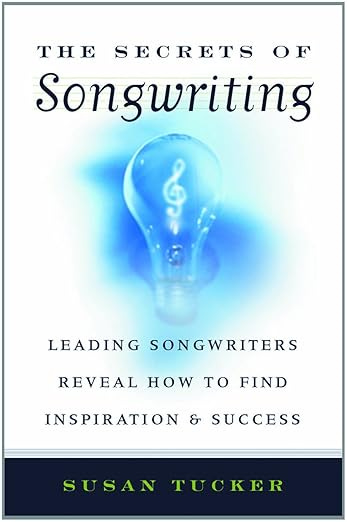
There is something peculiar about the word “secret.” It implies hidden knowledge, a locked room, the thing the successful won’t tell you. Susan Tucker’s The Secrets of Songwriting deploys the word on its cover and then, quietly, dismantles it across two hundred and fifty pages of testimony. The secret, it turns out, is that there is no secret. There is only showing up, and what you do while you’re there.
This is either the most reassuring or the most devastating thing a book about creative success can tell you, depending on where you’re standing.
Tucker’s method is simple: she sat down with thirteen Nashville hit songwriters and asked them how they work. The roster reads like a greatest-hits compilation: Allen Shamblin, who wrote “He Walked On Water.” Mike Reid, who co-wrote “I Can’t Make You Love Me.” Tia Sillers, whose “I Hope You Dance” became the kind of song that people play at graduations and funerals and moments they can’t otherwise name. Gretchen Peters, whose “Independence Day” spent years in the country music hall of fame as a lyric sheet with bad drafts still visible on it. Steve Seskin, Jason Blume, Hugh Prestwood, Bob DiPiero, Craig Wiseman—collectively, these writers have produced hundreds of number one singles and tens of millions of records sold.
What Tucker finds when she asks them how it happens is, at first, alarming.
The Thing They Won’t Stop Saying
Every single one of them, at some point, believes they are finished. Not stuck—finished. The well dry, the gift revoked, the world about to discover they never knew how to do this.
Blume: “I’m afraid I’ll never write again.” Cannon: “That sucks. What do you think, you’ve got something to say?” Sillers: “That’s that; you’re a has-been.”
Tucker quotes these in her introduction and then reveals they belong to the writers of the biggest songs of the past three decades. The effect is immediate and important. She is not saying these writers are self-defeating. She is saying the voice is universal—and that what separates the ones who succeed is not the absence of the voice but the decision to write anyway.
This is a mundane observation until you try to act on it. Then it becomes the whole game.
The Appointment
Mike Reid offers the book’s most precise metaphor for what this decision requires. He describes the creative self as a separate entity—a part of you that exists in darkness and wants desperately to come into the light. You make appointments with that part of yourself. You keep them faithfully. “There is that part in you,” Reid says. “It will wait a lifetime if it has to. But it’s not going to take part in a faithless relationship.”
The metaphor is Romeo and Juliet. Reread it and notice what he’s actually saying: that the secret of Romeo and Juliet is not passion, or fate, or the families. It is the appointments. They showed up. That’s the whole story.
What Reid is describing—and what the book circles again and again from different angles—is something closer to a practice than an inspiration. Not the muse descending but the body at the desk, the guitar in the hands, the pen on the page. And yet not mere discipline either, because discipline alone produces what Seskin calls “heartless songs”—technically correct, emotionally evacuated, indistinguishable from everything else.
The Two-Equation Problem
The tension the book keeps returning to—sometimes explicitly, more often by implication—is between catharsis and craft. Raw feeling versus learned technique. Between writing what pours out and knowing how to shape it so other people can receive it.
Blume articulates this most directly. He spent his early twenties writing in pure catharsis—candles, wine, nobody’s listening, this is just for me. Then he took a workshop and discovered structure existed. The realization changed everything, but not immediately for the better. He learned craft and temporarily lost his voice. The songs became correct. They stopped feeling real.
This is the developmental arc the book traces across multiple careers. Seskin tells an almost identical story: fifteen years of cathartic writing, then three years of learning craft so thoroughly he wrote “generic” songs with no distinctive voice. Then recovery. For both writers, the third stage—where craft and genuine feeling operate together—arrived only through years of each failing alone. Reid describes the same arc, independently, without having read Blume. The convergence is the book’s strongest piece of evidence that something real is being described.
This matters because it means the book is not actually about the shortcuts. It is about the necessity of the long way.
Who Gets to Know What
There is a social dimension to these interviews that Tucker doesn’t always foreground but that runs under the surface of nearly every chapter. Nashville is a small world built on co-writing, pitching, and relationship. Who you know, who believes in you, who is in the room—these things shape careers in ways that talent alone cannot predict.
Rob Galbraith believed in Mike Reid when nobody else did, and Reid says flatly that you don’t need the whole town to believe in you. You need one person. Shamblin’s origin story involves a stranger at Wyatt’s Cafeteria who turned out to know Martha Sharp at Warner Brothers. Blume’s decision to take less money from Zomba because of their international connections paid off in Britney Spears. DiPiero heard Seskin at the Bluebird and made an introduction that changed the trajectory of Seskin’s career.
The book is not naive about this. Tucker includes these stories not as evidence of luck but as evidence of what happens when preparation and connection meet. None of these writers were discovered doing nothing. They were playing writer’s nights, taking meetings, demoing songs, showing up. The people who found them found them because they were findable.
What the book is careful not to say—and what its implicit framework requires us to notice—is how much the access problem shapes who gets to make it at all. Every one of these writers is white. Most are male. The Nashville of The Secrets of Songwriting is not the full geography of American music, and the advice to “show up, keep writing, find your one believer” assumes a certain freedom of movement and access that not everyone possesses equally. This isn’t Tucker’s stated concern, but it is the unspoken limit of the book’s generalizability.
The Two Things They All Agree On
Strip away the differences in process—Prestwood writing a song a month, Wiseman writing a hundred and fifty a year, Peters binging for weeks then going fallow, Beavers writing on buses and in parking lots—and two convictions appear across every interview without exception.
First: the work is in the writing. Not in waiting. Not in preparing to write. The gap between what a writer imagines and what they can actually produce closes only through writing. Reid: “If you’re a writer, I believe you have to write every day. I don’t care if it’s ten minutes.”
Second: life is the material. Not a generic life, not an observed life, but yours. Reid’s transformation from the charts-studying craftsman to the writer who got cuts came the moment Galbraith told him to stop putting other people’s emotions in the container and start putting his own. Shamblin’s advice is blunter: hoe in your own garden. Wiseman’s is bluntest: the general public has a sophisticated bullshit detector, and they will find you out if you’re making stuff up.
The paradox these writers are describing—write what only you could have written, and somehow millions of people will recognize it as theirs—is the fundamental paradox of art. You don’t get there by solving it abstractly. You get there by writing enough songs to find, in the specificity of your own experience, the thing that is universally true.
What It Means
The book was published in 2003. The music industry it describes—staff writing deals, physical album sales, country radio as the primary path to success—has been substantially reorganized by streaming, social media, and the collapse of the traditional label system. The advice in these pages predates all of that.
And yet none of it is obsolete.
The two-equation problem persists. The appointments persist. The voice that says you’re finished—it persists. The basic requirement to write what is true rather than what sounds true: this does not change with the technology that delivers it.
What Tucker has assembled here is not a manual. It is a record of testimony from thirteen people who found a way to stay faithful to a practice that kept trying to convince them it was over. The secret they share is not a technique. It is a posture. A refusal to stop showing up.
The book promises to name the mysterious ingredient that separates good from great. It never does. The honest answer, visible in the aggregate across all thirteen chapters, is this: the ingredient is the need itself. The compulsion to write that precedes any craft, any career, any commercial consideration. You either need to do this more than you need anything else, or you don’t. The craft, the discipline, and the commercial awareness can be taught. The need cannot.
That is a smaller book than Tucker promised. But it is the true one.
Tags: Nashville songwriting craft, creative process testimony, survivorship bias creative careers, writer’s block creative psychology, commercial music craft development