


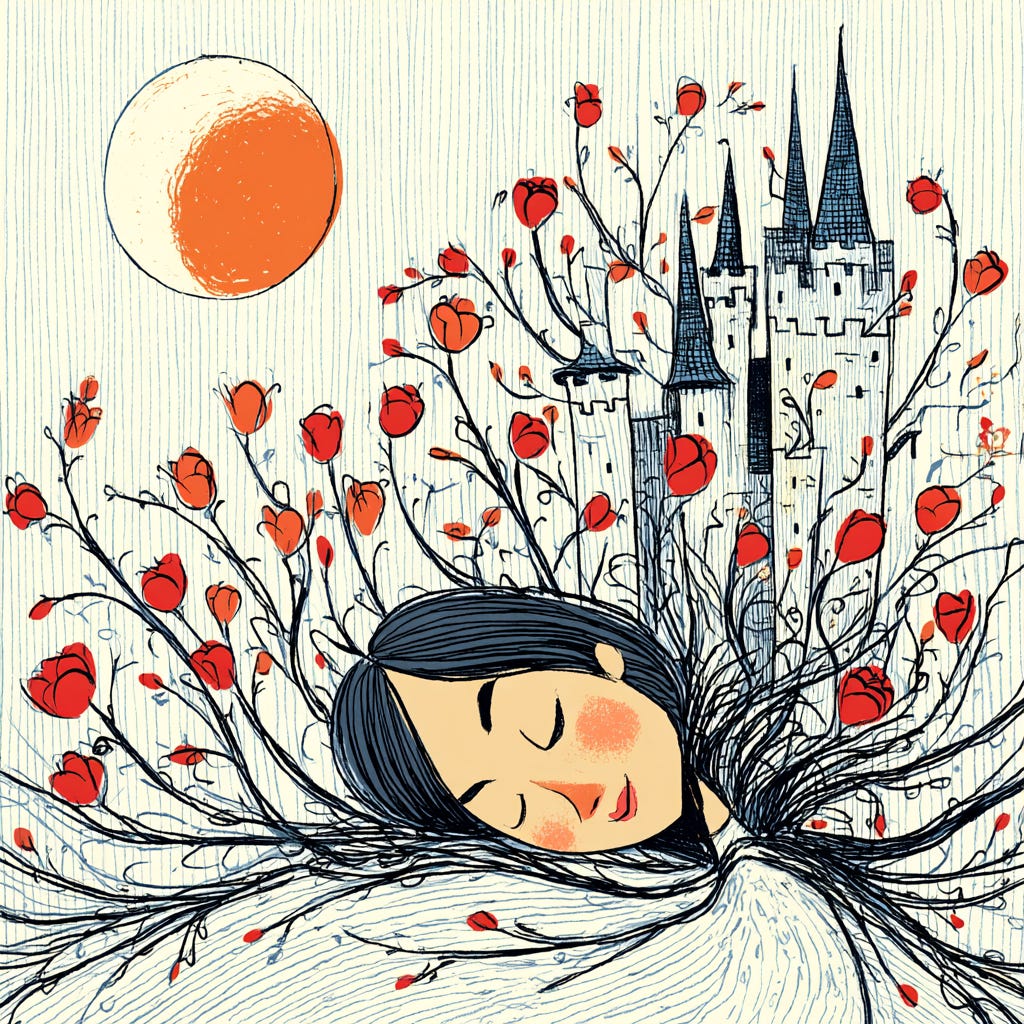
The One Thing You Must Understand Before You Build
A fairy tale song is not a summary with a melody.
This sounds obvious. It is not. Most AI-generated children’s music makes exactly this mistake: it takes the plot, compresses it, attaches a tune, and calls it a song. The result is a song that a child can hear and immediately forget. Not because the production is poor. Because the mechanism is missing.
The mechanism is the arc. The felt, temporal experience of a story moving from disruption through consequence through waiting to resolution. Not the knowledge that those things happened — the experience of moving through them in time, verse by verse, with the refrain holding the emotional center between each beat, building toward the moment the refrain changes and the brain releases the reward it has been waiting for.
That is what this guide teaches you to build. The mechanism. Not the summary.
What Narrative Comprehension Actually Is and Why It Matters
Children’s developing narrative comprehension depends on encountering complete story structures repeatedly. Research in developmental psychology is consistent on this point: children who have heard more stories with complete narrative arcs develop stronger reading comprehension, stronger language production, and stronger theory of mind.
Theory of mind — the capacity to understand that other people have internal states different from your own — is not a soft skill. It is the cognitive foundation of empathy, of social competence, of the ability to model another person’s perspective well enough to navigate a classroom, resolve a conflict, understand a character in a novel. It develops through encountering fictional minds in stories, watching characters want things and fear things and feel things about what happens to them.
This is why fairy tales matter beyond their plots. The story that survives is the one that encodes moral complexity in narrative form — complexity a child can feel without being instructed in it, can carry without knowing they’re carrying it, can access years later when they encounter an analogous situation in their own life and find they already have a template.
A summary cannot do this. A complete arc can.
The minimum structure. Narrative theorists call it canonical story grammar: setting, initiating event, internal response, attempt, consequence, reaction. Every element matters. The internal response is where theory of mind develops — the character feeling something about what happened. The attempt is where agency lives — action is possible even when outcomes are uncertain. The reaction is the emotional completion the brain is waiting for. Remove any element and you have removed a developmental function.
The neurobiological payoff. Pre-verbal infant research documents measurably different brain responses to complete versus incomplete narratives. Completed arcs produce positive affect. Incomplete arcs produce cortisol elevation. The child who hears a story arrive somewhere receives a neurological reward. Build for that reward. Every time.
Why This Specific Story Has Survived Two Hundred Years
“Briar Rose” was published by the Brothers Grimm in 1812. They were collecting, not inventing. The story existed in France, in Italy, in variants across European oral tradition for centuries before that.
What kept it alive is not the magic. It is four moral truths the story encodes in narrative form — truths that children need and that direct instruction cannot deliver as durably:
Fate is not always stoppable. The king burned every spindle. Fate’s sharp edge refused to dwindle. Precaution is not omnipotence. Some things arrive regardless. The child who has heard this template repeatedly is equipped — not frightened, equipped — for the experience of encountering what cannot be prevented. The story provides endurance as the response. Not despair. Not denial. Endurance.
Kindness can soften but cannot always prevent. The twelfth fairy cannot undo the curse. She changes death to sleep. Mitigation is not resolution. Good actions matter even when they cannot fix everything. This is moral realism — the position between nihilism and naive optimism — and it is one of the hardest things to teach. The story teaches it without a word of instruction.
Waiting is not the same as passivity. The hundred years of sleep are the container that holds the story until the right thing can arrive. Some resolutions cannot be forced. The child who has felt this in narrative form — who has sat with the refrain repeating asleep so long, asleep so long and then felt the refrain change — has experienced patience as structure, not as virtue being preached.
The curse arrives from a real wrong. The angry fairy was excluded. The king’s thoughtlessness produced a consequence. This is cause and effect in a moral register. Exclusion produces harm. Careless power produces danger. The story is teaching the relationship between how we treat people and what follows from how we treat them. It is doing this through a villain who has a legitimate grievance — which is a more sophisticated moral situation than pure malice, and a more useful one.
Remove any of these four and you have a weaker story. The Lyrical Literacy version keeps all four.
The Refrain: The Most Important Design Decision in a Fairy Tale Song
Most fairy tale songs get the refrain wrong. They treat it as a hook — a catchy phrase that returns periodically. It is not a hook. It is an emotional container.
Here is the distinction: a hook is pleasant to hear again. A container holds something — it maintains an emotional state between verses, creates an expectation, and then satisfies that expectation when the state changes.
In “Briar Rose,” the refrain holds the sleeping state:
Oh, Briar Rose, asleep so long, Bound by a spell both fierce and strong. A hundred years until she’s kissed, A slumbering beauty never missed.
Every time this refrain returns — after the birth verse, after the curse verse, after the spindle verse, after the thorns verse — it reminds the child: she is still asleep, the hundred years are still passing, the resolution has not arrived. The waiting is structural. The child is not told to be patient. The music makes them wait.
Then the refrain changes:
Oh, Briar Rose, awake at last, The years of slumber all have passed.
Two phrases change. The melody is identical. The child hears the melody as continuous and the meaning as transformed. The dopaminergic reward of narrative completion arrives at precisely the moment the story earns it. The child feels the relief before understanding it. That feeling is the learning.
The design question for your own fairy tale song: What is the ongoing emotional state your story holds, and what two or three words change when that state resolves?
Write down the answer to that question before you write a single verse. Then build the refrain around it. Then build the entire song toward the moment that refrain changes.
If you cannot answer the question, the story is not ready to become a song yet.
The Six-Step Workflow
Step 1: Map Every Narrative Beat
Before Lullabize. Before any LLM. Map the arc.
For Briar Rose, the complete map:
Setting — the kingdom, the wish for a child
Initiating event — the birth, the feast, twelve fairies’ blessings
Disruption — the uninvited fairy’s curse
Partial mitigation — the twelfth fairy softens the curse
Attempt at prevention — the king burns every spindle
Curse fulfills — the tower, the spindle, the touch
Consequence — Briar Rose and the whole kingdom fall asleep
Complication — the hedge of thorns, the princes who fail
Resolution — the right prince arrives when the time has passed
New beginning — awakening, wedding, kingdom restored
Ten beats. Nine verses. Nothing omitted.
If you cannot map six distinct beats for your story, the story is a summary, not a narrative. Find the missing beats before proceeding. They are there — they have just not been articulated yet.
Step 2: Design the Refrain
The Lullabize prompt for the refrain requires four things: the character’s name and condition, the emotional tone, the specific words that will change at resolution, and consistent meter between the waiting and resolved versions.
Example prompt:
Write a four-line refrain for a fairy tale song about a sleeping princess. The refrain should hold her sleeping condition throughout most of the song: “asleep so long,” “bound by a spell,” “a hundred years.” At the resolution, exactly two phrases change: “asleep so long” becomes “awake at last,” and “a hundred years until she’s kissed” becomes “the years of slumber all have passed.” The melody must work for both versions — same meter, same rhythm, so the child hears the music as continuous and the meaning as transformed.
Test the refrain before writing any verses. Read both versions aloud. Does the first version hold stasis clearly? Does the second version feel like arrival? Only proceed when the answer to both is yes.
Step 3: Write One Verse Per Beat — With Moral Content Specified
Each verse prompt must include: the narrative beat, the characters present, the emotional register, and the specific moral content that must be preserved.
Template:
Write one verse (four lines, AABB rhyme scheme) for this narrative beat in a fairy tale song. Beat: [describe specifically]. Characters present: [name them]. Emotional register: [joyful / threatening / foreboding / mournful / triumphant]. Moral content to preserve: [name it explicitly]. Voice: warm unhurried storyteller, not performer — like someone telling this story again because it is worth telling again.
The moral content field is not optional. For the curse verse, it should read:
Moral content to preserve: the angry fairy was not invited — this is the cause of the curse, not random malice. The king’s thoughtlessness must be legible. The child should understand why the curse happened.
For the prevention verse:
Moral content to preserve: the king’s attempt fails. Fate’s sharp edge refused to dwindle. Precaution is not omnipotence. The failure should be stated plainly, not softened.
For the thorns verse:
Moral content to preserve: the princes who try to pass do not make it. This establishes that the resolution cannot be forced — it must arrive in its own time. The failed princes matter.
Evaluate each verse against three questions: Is the beat present? Is the moral content intact? Does the verse flow into the refrain that follows it?
Step 4: Choose the Voice
The fairy tale song requires a storyteller’s voice. Not a performer’s.
The difference is relational. A performer presents material from outside it, to an audience. A storyteller inhabits material from inside it, alongside a listener. The child hears the difference. The storyteller voice signals that the story is safe, that it has been carried carefully, that it will arrive where it is supposed to arrive.
For “Briar Rose”: Nik Bear Brown. Deep warm baritone, moving between narration and melody without announcing the shift — the way oral tradition moves, without seams. His register here is unhurried and weighted: the specific gravity of a story being told again because it is worth telling again. The warmth carries safety. The depth carries the story in the body, not just the ear.
Voice matching table for fairy tale songs:
Story typeVoiceWhyEuropean fairy tale, questNik Bear BrownStoryteller baritone, oral tradition registerFable with explicit moralThe Wandering BardNarrator-vocalist, sung/spoken continuumHeritage or cultural folk taleVoice matching the traditionIn-group limbic advantage; the voice belongsBedtime fairy tale, sleep edgeMama Sparrow or Nik Bear BrownWarm, close-miked, parasympatheticEmotional tale, big feelingsLittle Ember + Auntie BlessingHonest register, presence over performanceSacred or devotional taleNewton Williams BrownConviction-rooted, testimony voice
Step 5: Build the Track
Style tags: folk ballad, storytelling, warm baritone, acoustic, fingerpicked, narrative, unhurried, lullaby-adjacent
Full prompt:
A gentle folk ballad with a warm deep baritone storyteller voice. Acoustic guitar as primary accompaniment — fingerpicked, unhurried, serving the narrative rather than driving it. The voice moves between narration and melody without announcing the shift. The refrain has its own distinct melodic identity that returns consistently throughout the song, so that when the words change at the resolution, the child hears the melody as continuous and the meaning as transformed. Production is warm and sparse: the story is the main event, the music is the room the story lives in. No dramatic production climax — the climax is entirely in the refrain change. Tempo is slow and steady from first verse to last.
Four things to check in the output:
Does the refrain have a consistent, recognizable melodic identity that returns without variation? Does the refrain change feel earned — deeply satisfying rather than surprising? Does the voice hold storyteller mode throughout, unhurried even in the disruption verses? Is the production spare enough that each verse’s narrative beat is legible?
If the production overwhelms the narrative at any point, strip it back. More acoustic. Less effect. The story is the main event.
Step 6: The Reception Test
The test is not production quality. It is what the child does with the song.
During the sleeping refrain (verses 2–5): Does the child settle? The refrain holds stasis — the lullaby function activates even outside a sleep context. A child growing quieter with each refrain repetition is responding to the emotional container working correctly.
At the refrain change: Does the child’s face change? Not dramatically — a shift of expression, a visible relief, a recognition. If it passes without response, the refrain was not consistent enough throughout the song for the change to register as change. Go back to Step 2 and rebuild the refrain with more consistent melodic identity.
After the song: Does the child ask about the angry fairy? Why the thorns let the prince through? What happened to the other princes? These questions are the evidence that matters most. They mean the moral architecture landed — the child is processing cause and effect in the story’s moral register. Each question is a theory of mind exercise being performed voluntarily.
The moral questions are the highest evidence. They mean the child received the complete story. Not the simplified one. The real one.
The One Thing You Must Not Do
The temptation in adapting fairy tales for children is to soften the difficult parts.
Do not do it.
The angry fairy’s anger is the teaching. Remove it and you have removed the lesson — the child gets random misfortune instead of a story about how exclusion produces harm.
The hundred years must feel long. The refrain’s job is to make the child wait. Compress the waiting and you have removed the mechanism that makes the resolution feel earned. The brain will not release the reward for a resolution it has not waited for.
The princes who fail matter. They are proof that the resolution cannot be forced. Remove them and patience loses its narrative justification.
The story survived two hundred years of telling because it kept all of this intact. The oral tradition that preserved it was doing something wise: it understood that children can hold moral complexity, and that the story which trusts them with it is the story they return to.
Trust them with the real story.
LYRICS:
Briar Rose (Grimm’s)
Once a king and queen, rich and fair,
Had gold and jewels beyond compare.
But a child was all they wished to see,
Till a fish granted them their plea.
Oh, Briar Rose, asleep so long,
Bound by a spell both fierce and strong.
A hundred years until she’s kissed,
A slumbering beauty never missed.
A daughter was born, lovely and bright,
The king’s heart danced at the joyful sight.
He called for a feast, with friends all around,
And twelve fairies came to bless the ground.
They blessed her with gifts, both sweet and rare—
Beauty, grace, and a heart to care.
But one fairy, who’d not been asked,
Showed up angry, face tightly masked.
Oh, Briar Rose, asleep so long,
Bound by a spell both fierce and strong.
A hundred years until she’s kissed,
A slumbering beauty never missed.
“The king’s daughter, on her fifteenth year,
Will touch a spindle, and disappear.”
But a kind fairy softened the curse,
“A hundred-year sleep, nothing worse.”
The king, in dread, burned every spindle,
But fate’s sharp edge refused to dwindle.
On her fifteenth year, alone she roamed,
Found an old tower, her doom now honed.
Oh, Briar Rose, asleep so long,
Bound by a spell both fierce and strong.
A hundred years until she’s kissed,
A slumbering beauty never missed.
The moment she touched the spindle’s tip,
She fell to the floor in a silent slip.
And all around her, life stood still—
From the cook to the birds on the windowsill.
A hedge of thorns grew thick and high,
Hiding the palace from prying eyes.
Princes tried but failed to pass,
The thorns held tight, a thorny mass.
Oh, Briar Rose, asleep so long,
Bound by a spell both fierce and strong.
A hundred years until she’s kissed,
A slumbering beauty never missed.
Then, one day, a brave prince came,
He heard of the beauty, knew her name.
He entered the hedge with courage bold,
And found her there, asleep and cold.
One gentle kiss, soft and true,
And Briar Rose’s eyes shone through.
The spell was broken, life awoke,
The palace bustled, the silence broke.
Oh, Briar Rose, awake at last,
The years of slumber all have passed.
A prince’s kiss, love strong and true,
And dreams of life began anew.
They married with joy, feasting wide,
The kingdom cheered for the prince and bride.
And together they ruled, through days and nights,
A tale of love and endless lights.
But fate’s sharp edge refused to dwindle.
On her fifteenth year, alone she roamed,
Found an old tower, her doom now honed.
Oh, Briar Rose, asleep so long,
Bound by a spell both fierce and strong.
A hundred years until she’s kissed,
A slumbering beauty never missed.
The moment she touched the spindle’s tip,
She fell to the floor in a silent slip.
And all around her, life stood still—
From the cook to the birds on the windowsill.
A hedge of thorns grew thick and high,
Hiding the palace from prying eyes.
Princes tried but failed to pass,
The thorns held tight, a thorny mass.
Oh, Briar Rose, asleep so long,
Bound by a spell both fierce and strong.
A hundred years until she’s kissed,
A slumbering beauty never missed.
Then, one day, a brave prince came,
He heard of the beauty, knew her name.
He entered the hedge with courage bold,
And found her there, asleep and cold.
One gentle kiss, soft and true,
And Briar Rose’s eyes shone through.
The spell was broken, life awoke,
The palace bustled, the silence broke.
Oh, Briar Rose, awake at last,
The years of slumber all have passed.
A prince’s kiss, love strong and true,
And dreams of life began anew.
They married with joy, feasting wide,
The kingdom cheered for the prince and bride.
And together they ruled, through days and nights,
A tale of love and endless lights.
Then, one day, a brave prince came,
He heard of the beauty, knew her name.
He entered the hedge with courage bold,
And found her there, asleep and cold.
One gentle kiss, soft and true,
And Briar Rose’s eyes shone through.
The spell was broken, life awoke,
The palace bustled, the silence broke.
Oh, Briar Rose, awake at last,
The years of slumber all have passed.
A prince’s kiss, love strong and true,
And dreams of life began anew.
They married with joy, feasting wide,
The kingdom cheered for the prince and bride.
And together they ruled, through days and nights,
A tale of love and endless lights.
And together they ruled, through days and nights,
A tale of love and endless lights.
Oh, Briar Rose, awake at last,
The years of slumber all have passed.
A prince’s kiss, love strong and true,
And dreams of life began anew.
#BriarRose #SleepingBeauty #FairyTalePodcast #MusicalStorytelling #GrimmsTales #LyricalLiteracy #ChildrensLiterature #FolkTales #PrincessStories #ClassicFairyTales
<iframe width="560" height="315" src="
" title="YouTube video player" frameborder="0" allow="accelerometer; autoplay; clipboard-write; encrypted-media; gyroscope; picture-in-picture; web-share" referrerpolicy="strict-origin-when-cross-origin" allowfullscreen></iframe>
<iframe data-testid=”embed-iframe” style=”border-radius:12px” src=”width=”100%” height=”352” frameBorder=”0” allowfullscreen=”“ allow=”autoplay; clipboard-write; encrypted-media; fullscreen; picture-in-picture” loading=”lazy”></iframe>


