

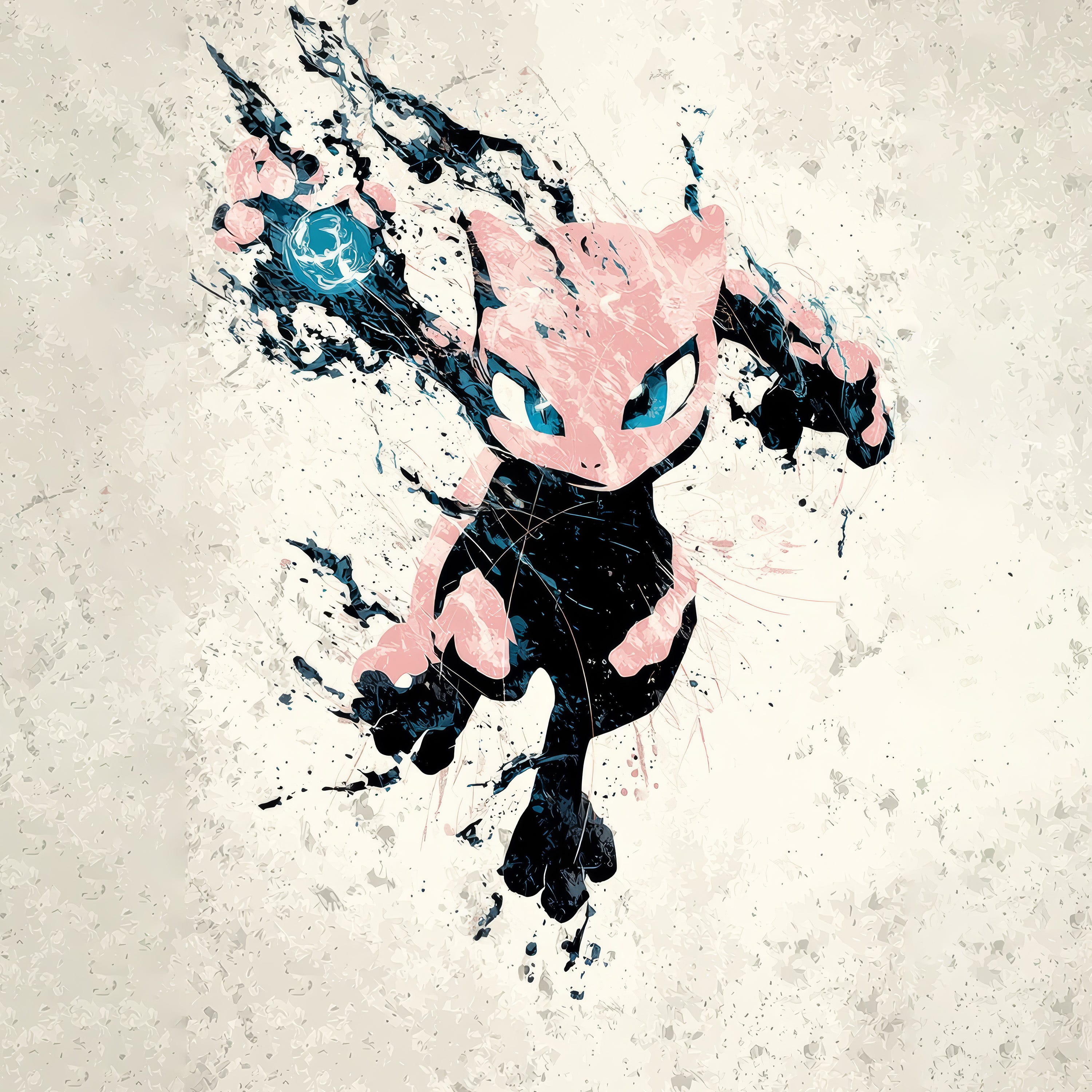
Consider what the Mew hunters actually did.
They had a hypothesis — that something was hidden in the code — that no official source confirmed and that the game itself denied. They designed informal experiments: specific button sequences in specific locations, tested against variable conditions, repeated across individuals. They compared results, corrected for error, revised the procedure. They built a distributed knowledge base through peer-to-peer oral transmission, accumulating partial observations across a community until the aggregate exceeded what any individual knew. They distinguished reliable findings from unreliable ones, noted the gap between consistent results and inconsistent results, and treated that gap as evidence of something real at the edge of their collective methodology rather than as evidence that the hypothesis was false.
This is the scientific method. It ran on a Game Boy. It was conducted by children who had no formal training in epistemology or experimental design. It produced a correct result.
Mew, Mew, Mi Secret Fren’ is a poem about this achievement — and it is designed to help children recognize what they were doing, in whatever equivalent of the Mew search their own lives contain, as the genuine cognitive work it actually is.
The Epistemological Stakes: Why This Is About More Than Pokémon
The educational research literature on informal learning — learning that occurs outside formal instructional contexts — documents a consistent and consequential finding: knowledge acquired through self-directed inquiry, peer transmission, and informal experimentation is more durably encoded and more motivationally resilient than equivalent knowledge acquired through direct instruction. The reasons are neurobiological: self-generated predictions, when confirmed, produce stronger dopaminergic reward than received information; social transmission through peers activates oxytocin pathways that strengthen encoding; personal investment in a knowledge question increases the amygdala’s participation in processing, which deepens hippocampal consolidation.
The Mew hunters were learning under optimal neurobiological conditions for durable knowledge formation. They were not learning despite the absence of official instruction. They were learning more effectively because of the absence of official instruction — because the knowledge was theirs to find rather than theirs to receive.
The educational system that most children inhabit is designed around the opposite assumption: that knowledge flows from authorities through official channels, that unofficial peer transmission is at best noise and at worst misinformation, that the test of a knowledge claim is whether it appears in the authorized source. The Mew legend is a case study in the limits of this assumption. The authorized sources said Mew did not exist. The children were right. The playground knew before the curriculum did.
The poem is not arguing against formal education. It is making a claim about what kind of knowing happens outside it — and validating that knowing as genuine, rigorous, and worth building on.
What the Poem’s Structure Is Teaching That Its Content Cannot
The poem alternates between two formal modes so consistently that the alternation is itself an argument.
The first mode runs on playground prosody — rhythmic, narrative, communal, built for transmission. Dem check beneath di pixel truck / Dem mash di buttons pray fi luck. This is the rhythm of I know something and I’m telling you. The prosody of oral tradition. Information moving between people through a form that makes it memorable, shareable, and collectively owned. The rhyme and rhythm are the encoding mechanism: the message arrives inside a container that makes it stick.
The second mode runs on compression and white space. Di mew of maybe / Code inna hush tone / A blinkin breeze / Dat never plan / Fi be known. This is the rhythm of private encounter with something not fully articulable. The line breaks perform the experience rather than describing it — the pause between A blinkin breeze and Dat never plan is the pause of a Game Boy screen in the dark, the moment before something appears that wasn’t there before. The form is the content.
The cognitive research on epistemic development identifies two distinct and equally necessary modes of knowing: propositional knowledge — shareable, verifiable, debatable statements about the world — and phenomenological knowledge — the first-person felt sense of direct experience. Most formal education privileges the first almost exclusively. The scientific consensus, the historical fact, the mathematical proof: these are propositional. The experience of pressing the buttons and feeling something almost there is phenomenological. Both are real. Both are epistemically legitimate. Most children in formal educational contexts receive the implicit message that only the first counts.
The poem’s formal alternation is a sustained argument against this impoverishment. By giving each mode its own formal register — playground rhythm for the propositional, white space and compression for the phenomenological — the poem treats both as worthy of careful craft. The child who moves through both registers is being given a map of how knowledge actually works: the shared and the private, the transmissible and the felt, neither complete without the other.
The Grammar of Patois as Pedagogical Resource
The choice to write this poem in Caribbean Patois is not an aesthetic decision. It is a structural one, and understanding why requires understanding what Patois is.
Patois is a creole language — built from multiple linguistic traditions in contact, developed over centuries under conditions where the dominant language was imposed and the heritage languages were systematically suppressed. Creole languages are not corrupted versions of their source languages. They are new languages, built with specific grammatical architectures, lexical systems, and semantic capacities that reflect the particular cognitive and expressive needs of the communities that built them. They carry the precision of languages that had to do significant semantic work in unofficial registers — that had to name things the official language was not designed to name.
Ghost cyant leave when kids dem play. The grammar here is not informal English. It is Patois grammar: cyant as the negated modal, dem as the collective plural subject, the clause operating with an efficiency that English cannot replicate without circumlocution. The semantic content — that the ghost of a collectively believed entity persists in the space where children play — is delivered more precisely in Patois than any English translation can manage, because Patois carries the conceptual heritage of a tradition that has always known how belief sustains entities beyond their official existence.
For children who carry Patois as a family language, the poem activates the in-group limbic advantage documented consistently across heritage language research: measurably stronger emotional engagement, deeper encoding, and more robust retention than equivalent content in the dominant language. The amygdala recognizes the heritage language as a belonging signal, which deepens hippocampal consolidation of everything the poem carries.
For all children, the poem demonstrates that Patois is a language adequate to mythology, epistemology, and the most philosophically complex questions available — not despite its unofficial status, but partly because of it. The language built outside the official system is the correct language for the knowledge built outside the official system. The poem’s form and content are continuous.
The Central Passage and Its Three Simultaneous Arguments
Not built / Jus dreamt / Not drawn / Jus felt / A likkle pink parentheses / The size / Of self.
This is the poem’s most concentrated intellectual content, and it is doing three things simultaneously at three different registers.
At the technical register, it is accurate. Mew was not built into the game’s official structure. It was dreamt — by Shigeki Morimoto in the four days before shipment — and placed in the code as an unauthorized addition. Not drawn / Jus felt describes the experience of players who encountered the entity through the glitch: felt before visible, present before confirmed.
At the formal register, the line breaks are doing philosophical work. A likkle pink parentheses. A parenthesis is a typographical object that exists inside a text without being required by the text’s official grammar. It is real, functional, present — and simultaneously unofficial, optional, existing in the gap the official structure left open. The line break after parentheses performs the gap. The isolated The size / Of self performs the smallness and the completeness simultaneously: this is the right size, not a diminished size. The self is parenthesis-sized. That is its correct description.
At the philosophical register, the passage delivers a claim about identity and existence that will take years to arrive at analytically. The self is not built but dreamt. Not drawn but felt. It exists in the official system’s gaps rather than at its authorized coordinates. For children who have felt like parentheses — existing in the gaps, present but not officially counted — this passage names something that most children’s literature does not name. It is identity-affirming content delivered not as reassurance but as accurate description. You are not too small. You are parenthesis-sized. That is not a limitation. That is the correct measurement.
The Four Learning Outcomes
Formal epistemic vocabulary for informal learning. The child who has inhabited this poem carries a framework for understanding what their own self-directed knowledge building is doing: not play that interrupts learning, but the specific cognitive activity — mental simulation, collective verification, oral transmission, phenomenological knowledge construction — that all serious inquiry requires. The playground is not where learning stops. The playground is where some of the most important learning happens.
Distributed cognition as a natural experience. Dem throughout the poem — never I, never she alone — establishes the collective subject as the poem’s natural grammatical home. Knowledge that belongs to the community of knowers, built through distributed inquiry, is the poem’s default. The child who has this grammar in the body has been given a model of knowledge-building that is collaborative at its foundation.
The two modes of knowing as equally legitimate. Propositional and phenomenological, playground rhythm and white space, dem mash di buttons and di mew of maybe — both modes, both crafted, both necessary. The child who moves between them in the poem has practiced moving between them as an epistemic practice.
The parenthesis as a framework for self. Small. Unofficial. Dreamt rather than built. Existing in the gaps the official structure left. Present, functional, real — without requiring official authorization for any of it. Code or nah, yuh real to mi. The poem’s final line is the clearest statement of this framework: existence confirmed not by official documentation but by felt relationship. For any child who has felt like a parenthesis in the official text, this is not consolation. It is accurate description, delivered with precision and without apology.
LYRICS:
Mew mew
Wagwan gyal where yuh dem go
Mew mew mi secret fren
Yuh hide weh di game cyant end
Myth an’ data dream an’ scheme
She di pink one weh slip tween stream
Di mew of maybe
Code inna hush tone
A blinkin breeze
Dat never plan
Fi be known
Dem check beneath di pixel truck
Dem mash di buttons pray fi luck
No sprite pop up screen cyant talk
But still dem swear dem see she walk
She drift tween code and breath
Lullaby riddim dodgein death
Just likkle flicker
Dat softly show
Di ting dat gameboy never know
A tech yout wid sly lil grin
Slip mew in code hid her within
Dem neva plan fi she to stay
But ghost cyant leave when kids dem play
Not built
Jus dreamt
Not drawn
Jus felt
A likkle pink parentheses
The size
Of self
Mew mew mi secret fren
Yuh hide weh di code cyant end
Myth an’ glitch real or seem
She di pink dot weh slip tween dream
Mew mew under di tree
Code or nah yuh real to mi
Tags: scientific method informal learning self-directed inquiry Mew glitch epistemology children, creole language Patois grammar precision unofficial knowledge identity limbic, propositional phenomenological epistemic modes formal register white space cummings, parenthesis identity framework small unofficial real self-concept children’s literature, distributed cognition collective subject dem grammar oral transmission knowledge building
#MusiqueAI #HumansAndAI #AIMusic #LyricalLiteracy #SpiritSongs #GhostArtists #OpenSourceAI #MusicResearch #AIforHumans #IndieMusician
<iframe width=”560” height=”315” src=”
title=”YouTube video player” frameborder=”0” allow=”accelerometer; autoplay; clipboard-write; encrypted-media; gyroscope; picture-in-picture; web-share” referrerpolicy=”strict-origin-when-cross-origin” allowfullscreen></iframe>
<iframe data-testid=”embed-iframe” style=”border-radius:12px” src=”width=”100%” height=”352” frameBorder=”0” allowfullscreen=”“ allow=”autoplay; clipboard-write; encrypted-media; fullscreen; picture-in-picture” loading=”lazy”></iframe>


