


The children’s music industry has a problem it doesn’t know is a problem.
It optimizes for charm. Bright voices, simple melodies, the cheerful insistence that everything is fine and fun. Parents stream it. Children tolerate it. Preschool teachers put it on in the background. It occupies attention. It does not, in any measurable sense, build anything.
The neuroscience has known this for decades. The most effective music for developing brains is not the most cheerful music or the most professionally produced music. It is music engineered from specific research — built around the rhythmic frequencies, phonemic patterns, and narrative structures that a developing nervous system is primed to convert into language, literacy, and mathematical reasoning. This music is rare. It has historically been expensive to make. It has therefore reached only the children whose families and institutions could afford it.
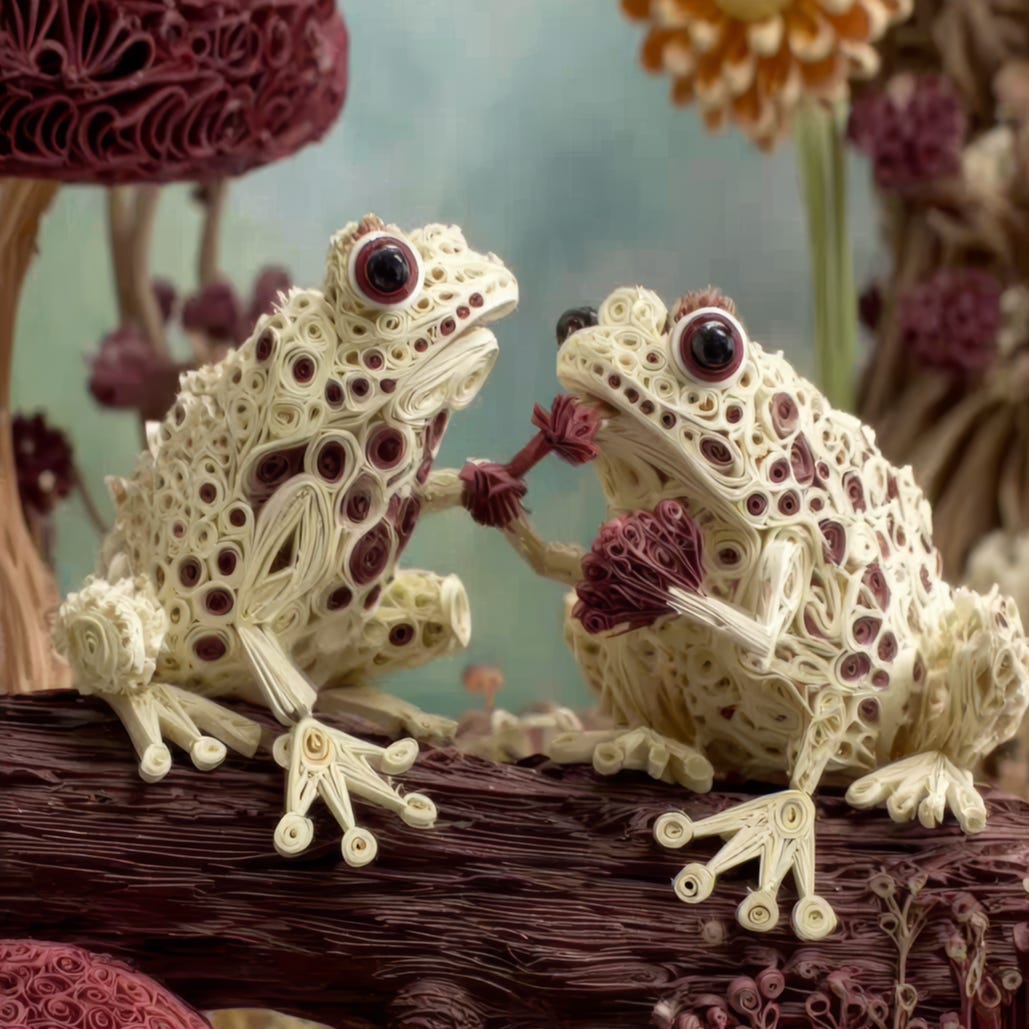
Five Little Speckled Frogs, produced through Humanitarians AI’s Lyrical Literacy project and performed by Mayfield King, is built differently. This is an account of how, and why it matters.
The Subtraction Problem — And the Fix
Every version of Five Little Speckled Frogs is a subtraction engine. Five frogs on a log. One jumps. Four remain. The pattern repeats: same verse structure, one variable changing, the child’s brain encoding the mathematical rule through repetition before it has the vocabulary to state the rule in words. This is how mnemonic pedagogy works. The rhythm carries the concept until the concept can carry itself.
The problem is the ending.
Five frogs. Then four. Then three. Then two. Then one. Then none. The log is empty. The song stops. What the child’s nervous system receives — implicitly, without anyone intending it — is that subtraction leads to absence. The counting ends in zero. Zero is the conclusion.
The Humanitarians AI version doesn’t accept this. The extended verses name the traditional ending before reversing it: “Oh, no more speckled frogs / Not one on the log / No more frogs to sing this song, / All gone!” — and then: “Each one took a dive / And they’re swimming, feeling alive / Down in the pool, oh how they thrive!” The pool is full. The frogs are together. They croak beneath the moon. They belong.
This reversal is a neurobiological decision. Research on pre-verbal mother-infant interaction documents that infants as young as four months are sensitive to narrative arc — to the structure of beginning, development, and resolution. By ten months, this sensitivity shows up in neural tracking data. Completion of a narrative arc correlates with enhanced positive affect and dopaminergic reward. A song that ends in “no more frogs” leaves a small nervous system in unresolved subtraction. A song that ends in thriving closes the loop. The dopamine releases. The mathematical pattern is encoded in the context of transformation rather than loss.
The pedagogical difference is not subtle. The child who learns subtraction through depletion learns that taking away produces nothing. The child who learns subtraction through transformation learns that the operation moves things — that five minus five is not emptiness, but a different configuration of five. The pool is full. The frogs are singing. The math led somewhere.
What “Splish Splash” Is Actually Doing
Most people hear “splish splash” as a fun sound. It is also a precision instrument.
The extended verses of the Lyrical Literacy version are dense with consonant clusters that don’t appear in the traditional song: the /sp/ in “splish splash,” the /pl/ in “leap and play,” the /r/ onset followed by bilabial stop in “ribbit ribbit,” the alternating vowel patterns of “night and day.” These are not the accidents of rhyme. They are what the framework calls phonemic diversity — the deliberate range of distinct sound units engineered into every Lyrical Literacy production.
Here is why it matters. The developing auditory cortex uses what researchers call amplitude rise times — the speed at which an acoustic signal transitions from silence to voiced sound — to segment speech into discrete units. A child who cannot reliably distinguish /sp/ from /st/ from /sn/ will struggle to distinguish “spin” from “sting” from “snip.” That distinction is not vocabulary. It is the underlying phonological architecture on which vocabulary is built. And phonological awareness — the ability to hear and manipulate the sound units of language — is the single strongest predictor of reading ability that fifty years of early childhood research has produced. Stronger than vocabulary. Stronger than socioeconomic status. Stronger than measured intelligence.
The child singing “splish splash” is building this architecture. They are not doing this knowingly. They are doing it because the word feels good in the mouth, because the /sp/ has a satisfying sharpness, because “splish splash” is more fun to say than “in the water.” The Lyrical Literacy framework designs for this: it makes the learning indistinguishable from the pleasure, because that is the only reliable delivery mechanism for a two-year-old.
The traditional verses already contain useful phonemic material — /sp/ in “speckled,” the unstressed syllable pattern in “delicious,” the velar consonant in “glug” contrasting with the labial stop in “yum.” The extended verses expand the library. More clusters. More contrast. More amplitude rise times for the auditory cortex to process and encode. Each repetition is a small deposit into the account that eventually pays out as reading.
The Pulse Underneath Everything
Beneath the counting and the phonemic clusters, there is something the child cannot consciously detect.
The Lyrical Literacy framework specifies a 2 Hz rhythmic foundation across its productions — approximately two pulses per second, present in the music’s feel but never announced as a feature. It is the thing that makes a child begin to move before they begin to sing. It is the groove, experienced in the body before it is processed in the mind.
The research behind this number is precise. A 2014 magnetoencephalography study — MEG scanning, which measures magnetic fields produced by neural activity — found that 10-month-old infants who showed strong neural tracking of a 2 Hz auditory rhythm developed measurably larger vocabularies at 24 months than infants with weaker neural tracking at the same pulse rate. The developing auditory cortex appears to use the 2 Hz frequency as a scaffold for speech processing. The brain locks onto the pulse. Language processing runs along the scaffold.
For Five Little Speckled Frogs, the implication is this: the song’s pulse is calibrated, not arbitrary. The child who hears this song forty times is not simply learning to count. They are repeatedly exposing their auditory cortex to a rhythmic scaffold the neurobiological research associates with stronger language development — the vocabulary at 24 months, the reading at five, the reading comprehension at eight.
No single song guarantees these outcomes. They are built through accumulated exposure: the hundred plays, the thousand repetitions, the “Glug glug!” in the car and at dinner and before sleep. Each repetition is a deposit. The song is the vehicle. The pulse is the mechanism. The account pays interest over years.
Why a Protest Singer Sings to Children
Mayfield King does not make children’s music. He makes conscious soul, protest funk, gospel R&B — the voice built in the tradition of Curtis Mayfield, whose falsetto argued with power, whose orchestral arrangements were acts of political imagination. Kingdom Must Come Down, No Kings has 1.2 million views. It is explicitly about what it looks like when the powerful are held accountable.
And yet he sings Five Little Speckled Frogs.
This is a pedagogical choice, not a branding one. The Lyrical Literacy framework’s vocal standard is stated precisely: “Age-appropriate genuine voice addressing children with intelligence, not condescension.” The children’s music industry has optimized for a sound that does not meet this standard — high, bright, artificially cheerful, performed from somewhere above the child rather than alongside them. Adults produce this sound because they believe children require it. The research does not support this belief.
What infants and toddlers actually respond to, according to infant-directed singing literature, is melodic contour exaggeration — amplified rises and falls in pitch — not infantilization of timbre or artificial cheerfulness of tone. A full, warm, present voice that takes the material seriously activates the same limbic and motor circuitry that adult music activates in adult listeners. The child’s nervous system does not require a children’s voice. It requires a voice that means what it sings.
Mayfield King means “Yum yum.” He means “Glug glug.” He brings the same instrument to the counting song that he brings to the protest song: a mid-range tenor across three to four octaves, built to deliver lyrics rather than decorate them, treating the material as worth singing rather than as something to be gotten through. The child’s auditory cortex receives a full signal. A simplified voice delivers a simplified signal. A full voice delivers a full signal. The nervous system takes seriously what it receives seriously.
The 248,000 views on this song are not a measure of virality. They are 248,000 instances of a child’s nervous system receiving that full signal — the 2 Hz pulse, the phonemic diversity, the resolved narrative arc, the voice that means it — and building something from the encounter. Something the child cannot name. Something that will show up later, in a different context, as an easier time with words.
The $5 Question
The Humanitarians AI framework produced this song for approximately $5 in API credits. A comparable production — studio time, session musicians, sound engineering, professional mixing and mastering — would have cost between $75,000 and $150,000 under the previous production structure.
That gap is not a footnote. It is the history of why research-grade children’s music has been scarce.
The neurobiological research on phonological awareness has existed for fifty years. The knowledge of what a 2 Hz pulse does to an infant auditory cortex has been available for a decade. The understanding that narrative arc completion releases dopamine in pre-verbal children is documented in the literature. None of this knowledge was secret. None of it was restricted. What was restricted was the production infrastructure to turn the knowledge into music and deliver that music at professional quality.
School districts with curriculum budgets could afford it. Educational publishers with production contracts could afford it. The family whose child needed it could not, in most cases, access it directly. The science sat in journals. The music that could have implemented the science sat behind a production cost that most families and most community organizations could never meet.
At $5 per track, that barrier is gone. The barrier now is whether the person making the song knows which research to apply and how to apply it. The Lyrical Literacy project at Humanitarians AI is the argument — made audible, at 248,000 views and counting — that knowing what to build is the genuinely hard part, and that the hard part has been done.
The frogs are in the pool. They are croaking beneath the moon. The child who has heard this song a hundred times has built something in their auditory cortex that will show up years from now as an easier time with reading, and no one will trace it back to “Splish splash.”
That is what $5 can do, when the person spending it knows what they are building toward.
LYRICS:
Five little speckled frogs,
Sat on a speckled log,
Eating some most delicious bugs.
Yum yum!
One jumped into the pool,
Where it was nice and cool,
Then there were four green speckled frogs.
Glug glug!
Four little speckled frogs,
Sat on a speckled log,
Eating some most delicious bugs.
Yum yum!
One jumped into the pool,
Where it was nice and cool,
Then there were three green speckled frogs.
Glug glug!
Three little speckled frogs,
Sat on a speckled log,
Eating some most delicious bugs.
Yum yum!
One jumped into the pool,
Where it was nice and cool,
Then there were two green speckled frogs.
Glug glug!
Two little speckled frogs,
Sat on a speckled log,
Eating some most delicious bugs.
Yum yum!
One jumped into the pool,
Where it was nice and cool,
Then there was one green speckled frog.
Glug glug!
One little speckled frog,
Sat on a speckled log,
Eating some most delicious bugs.
Yum yum!
He jumped into the pool,
Where it was nice and cool,
Then there were no green speckled frogs.
Glug glug!
Oh, no more speckled frogs,
Not one on the log,
No more frogs to sing this song,
All gone!
Each one took a dive,
And they’re swimming, feeling alive,
Down in the pool, oh how they thrive!
Splish splash!
The pool is full of frogs,
No more on the logs,
They’re happy in the water now,
Where they belong!
They croak a joyful tune,
Beneath the shining moon,
Singing together, with a happy swoon!
Ribbit ribbit!
Yum yum!
Ribbit ribbit!
Yum yum! Bugs in the air,
Snapping snacks without a care,
Glug glug! A bellyful treat,
Swimming ‘round with sticky feet!
Splish splash! They leap and play,
Ribbit ribbit! Night and day!
Yum yum! Glug glug!
They hop and hug,
Splish splash! In the bubbly bath,
Ribbit ribbit! Hear them laugh!
No more logs, just poolside cheer,
Froggies singing loud and clear:
Yum yum! Glug glug! Splish splash! Yum yum! Ribbit ribbit!
#LyricalLiteracy #SpeckledFrogs #CountingSongs #ChildrensMusic #EarlyMath #NurseryRhymes #FrogSongs #MusicEducation #SubtractionSong #ChildhoodClassics
<iframe width="560" height="315" src="
" title="YouTube video player" frameborder="0" allow="accelerometer; autoplay; clipboard-write; encrypted-media; gyroscope; picture-in-picture; web-share" referrerpolicy="strict-origin-when-cross-origin" allowfullscreen></iframe>
<iframe data-testid=”embed-iframe” style=”border-radius:12px” src=”width=”100%” height=”352” frameBorder=”0” allowfullscreen=”“ allow=”autoplay; clipboard-write; encrypted-media; fullscreen; picture-in-picture” loading=”lazy”></iframe>


